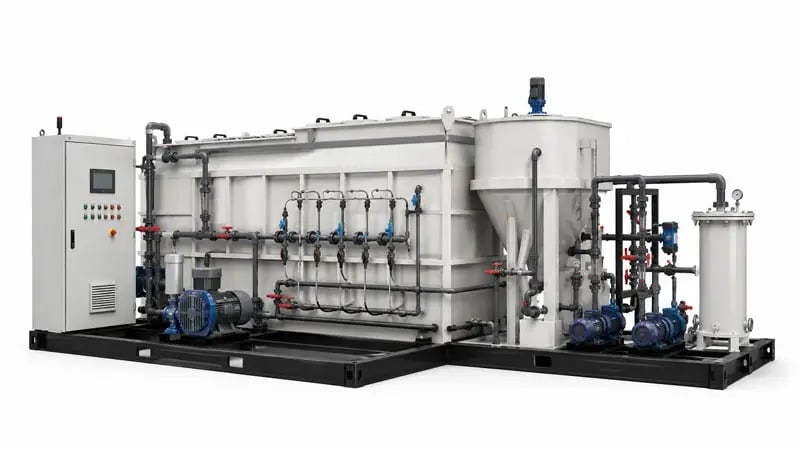
Selecting the right biological wastewater treatment system is one of the most critical decisions for municipal and industrial facilities managing organic pollution loads. The choice between MBBR, MBR, and conventional activated sludge technologies directly impacts treatment efficiency, operational costs, space requirements, and regulatory compliance. Understanding the strengths and limitations of each approach enables facility managers and engineers to align technology selection with site-specific constraints, effluent quality targets, and long-term budget frameworks.
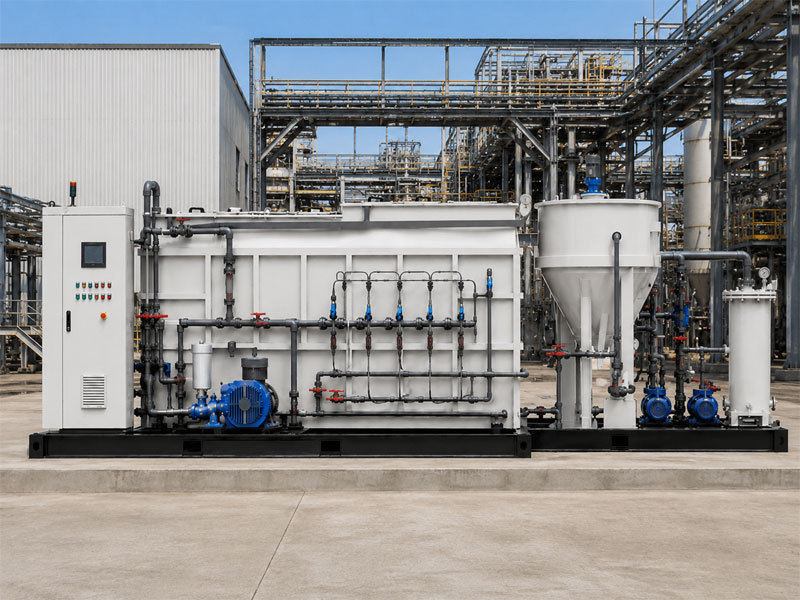
Each biological wastewater treatment system operates through distinct microbial degradation pathways and physical retention mechanisms. Conventional activated sludge remains the industry foundation, delivering proven performance across decades of installations. MBBR technology introduces attached-growth biofilm reactors that reduce footprint and improve oxygen transfer efficiency. MBR systems combine biological treatment with membrane filtration, achieving higher effluent quality but requiring greater technical oversight. This comparison examines operational performance, capital requirements, and practical selection factors to guide your technology decision.
Understanding Conventional Activated Sludge Performance
Core Mechanisms and Process Flow
Conventional activated sludge represents the foundational biological wastewater treatment system design, using suspended microbial biomass to oxidize dissolved organic compounds under aerobic conditions. Wastewater enters an aeration basin where air diffusers or mechanical aerators maintain oxygen supply and promote microbial metabolism. Microorganisms consume substrate, grow, and aggregate into settleable floc particles. The mixed liquor then flows to a secondary clarifier, where gravity separates biomass from treated effluent. Settled activated sludge returns to the aeration basin to maintain biomass concentration, while surplus sludge is removed for disposal or processing. This proven biological wastewater treatment system architecture has served municipal and industrial facilities worldwide for over one century.
Operational Advantages and Constraints
Activated sludge systems excel at removing biochemical oxygen demand and ammonia nitrogen across varying influent compositions. Process flexibility allows operators to adjust aeration rates, sludge retention time, and food-to-microorganism ratios to optimize treatment performance or minimize operating costs. Capital requirements remain moderate compared to advanced technologies, and replacement components are widely available. However, secondary sludge production creates significant operational burden; facilities must manage settled solids through thickening, digestion, dewatering, and disposal processes. Effluent quality depends heavily on clarifier performance, making the system vulnerable to upset conditions and peak flow events. Land footprint requirements exceed those of suspended-growth alternatives, and oxygen transfer efficiency remains constrained by diffuser limitations and air dissolution physics.
Evaluating MBBR Technology for Compact Applications
Attached Biofilm Growth and Oxygen Transfer
Moving Bed Biofilm Reactor (MBBR) technology represents a hybrid biological wastewater treatment system that combines suspended activated sludge principles with attached biofilm growth on plastic media carriers. These cylindrical or disc-shaped carriers float freely within the treatment tank, providing high specific surface area per unit volume—typically 500 to 1,000 m²/m³. Wastewater contacts both planktonic microorganisms and biofilm-covered media surfaces simultaneously. The continuous motion of carriers prevents biofilm clogging and promotes oxygen diffusion into deeper biofilm layers. MBBR achieves higher volumetric organic loading rates than conventional activated sludge, requiring 30 to 50 percent less aeration basin volume for equivalent treatment capacity. This compact footprint makes MBBR particularly valuable for retrofit projects and space-constrained industrial sites.
Operational Performance and Maintenance Requirements
MBBR systems deliver more stable treatment performance during shock loading and inhibitory conditions because biofilm communities can sustain nitrification and denitrification despite temporary upset events. The biological wastewater treatment system produces less solids per unit treated volume compared to activated sludge, reducing sludge handling and disposal costs. Effluent quality remains consistent, though some suspended solids carry over into secondary clarifier discharge. Media attrition—gradual wear and particle loss of carrier material—represents an ongoing operational cost that requires replacement of five to ten percent of media inventory annually. Oxygen transfer efficiency improves through enhanced diffusion and reduced tank volume, lowering overall aeration energy consumption. However, MBBR technology demands skilled process control and responsive operational adjustment; inadequate media distribution or improper aeration can cause process inefficiency and biofilm loss.
Assessing MBR Technology for Advanced Effluent Quality
Membrane Filtration Integration and Effluent Standards
Membrane Bioreactor (MBR) systems integrate biological wastewater treatment with membrane filtration, replacing conventional secondary clarifiers with microporous or ultrafiltration membranes. The biological treatment stage operates similarly to activated sludge, but the membranes reject virtually all suspended solids and many dissolved contaminants, producing effluent quality comparable to advanced tertiary treatment. Treated water typically achieves suspended solids concentrations below 10 mg/L and supports direct reuse for irrigation, industrial cooling, or toilet flushing applications. MBR technology requires no separate tertiary filtration stage, reducing overall facility footprint compared to conventional treatment trains. The membrane barrier also eliminates pathogenic bacteria and viruses, meeting stringent water reuse standards without additional disinfection.
Cost Structure and Membrane Management
MBR systems command higher capital investment than conventional activated sludge or MBBR technologies, primarily due to membrane module cost and bioreactor tankage design. Operating expenses reflect ongoing membrane fouling mitigation, replacement intervals of five to ten years, and specialized cleaning protocols. Flux limitations—the volume of filtrate produced per unit membrane area per day—constrain maximum treatment capacity unless multiple membrane modules operate in parallel. Operators must monitor transmembrane pressure continuously and execute frequent backflush and chemical cleaning cycles to maintain productivity. Despite elevated operating costs, MBR systems reduce overall water consumption in water-scarce regions and eliminate sludge disposal challenges through direct solids concentration without secondary clarification. The MBR biological wastewater treatment system proves most economically justified where advanced effluent quality commands premium value or water reuse income offsets membrane costs.
Comparative Selection Framework
Capital, Operating, and Space Requirements
Capital costs for conventional activated sludge systems range from 30 to 50 percent lower than MBBR installations, primarily due to simpler tankage and elimination of media inventory. MBBR systems typically cost 20 to 40 percent more than activated sludge but require 30 to 50 percent less basin volume, creating favorable economics for retrofit and constrained-site applications. MBR technology demands 50 to 100 percent higher capital investment than activated sludge, justified only by advanced effluent quality or water reuse opportunities. Operating costs reflect oxygen transfer efficiency, sludge production, and solids disposal expenses. Conventional activated sludge incurs highest sludge handling costs; MBBR reduces this burden through lower biomass yield; MBR eliminates sludge disposal through membrane concentration. Space requirements favor MBBR and MBR systems significantly, each requiring 40 to 60 percent less footprint than conventional biological wastewater treatment systems of equivalent capacity.
Effluent Quality and Regulatory Compliance
Conventional activated sludge achieves reliable removal of 85 to 95 percent of influent organic matter and ammonia nitrogen under normal operating conditions. Secondary clarifier performance limits suspended solids effluent concentrations to 15 to 30 mg/L, requiring tertiary filtration for sensitive water reuse applications. MBBR systems produce comparable organic removal efficiency but typically achieve 10 to 20 mg/L suspended solids due to improved biomass separation. MBR technology consistently delivers below five mg/L suspended solids and removes 99 percent of pathogenic bacteria, enabling unrestricted water reuse. Phosphorus removal across all three biological wastewater treatment system types requires chemical addition or dedicated anoxic zones; none inherently removes phosphorus beyond trace levels. Regulatory compliance drivers should inform technology selection—stringent effluent standards favor MBR despite cost premiums, while conventional technology suffices for less restrictive discharge permits.
FAQ
Which biological wastewater treatment system requires the least operational expertise?
Conventional activated sludge systems tolerate wider operational variation and require less specialized process control knowledge compared to MBBR or MBR alternatives. However, all three biological wastewater treatment system types demand trained operators familiar with biomass management, aeration control, and regulatory monitoring. MBBR and MBR systems offer more stable treatment performance during upset events, potentially reducing skill requirements during abnormal conditions. Site-specific experience and staff capability should influence technology selection.
Can MBBR or MBR systems replace existing activated sludge infrastructure?
MBBR retrofit into existing activated sludge basins is technically feasible and cost-effective for many facilities seeking improved efficiency and reduced sludge production. The biological wastewater treatment system retrofit typically requires media installation, aeration system upgrade, and process control recalibration. MBR retrofit demands more extensive modifications including membrane module installation, separate tank compartments, and enhanced bioreactor design, making wholesale replacement more economical than retrofitting existing clarifiers. Evaluate retrofit feasibility through hydraulic modeling and site-specific engineering assessment.
Which biological wastewater treatment system achieves the lowest total lifecycle cost?
Lifecycle cost comparison depends heavily on site-specific factors including land availability, effluent quality requirements, sludge disposal costs, and water reuse value. Conventional activated sludge minimizes capital costs but maximizes sludge handling expenses. MBBR balances moderate capital investment against reduced operating costs for space-constrained facilities. MBR systems justify total lifecycle economics only when advanced effluent quality supports water reuse revenue or tertiary treatment replacement value. Conduct comprehensive financial modeling incorporating all operating phases before technology selection.

 EN