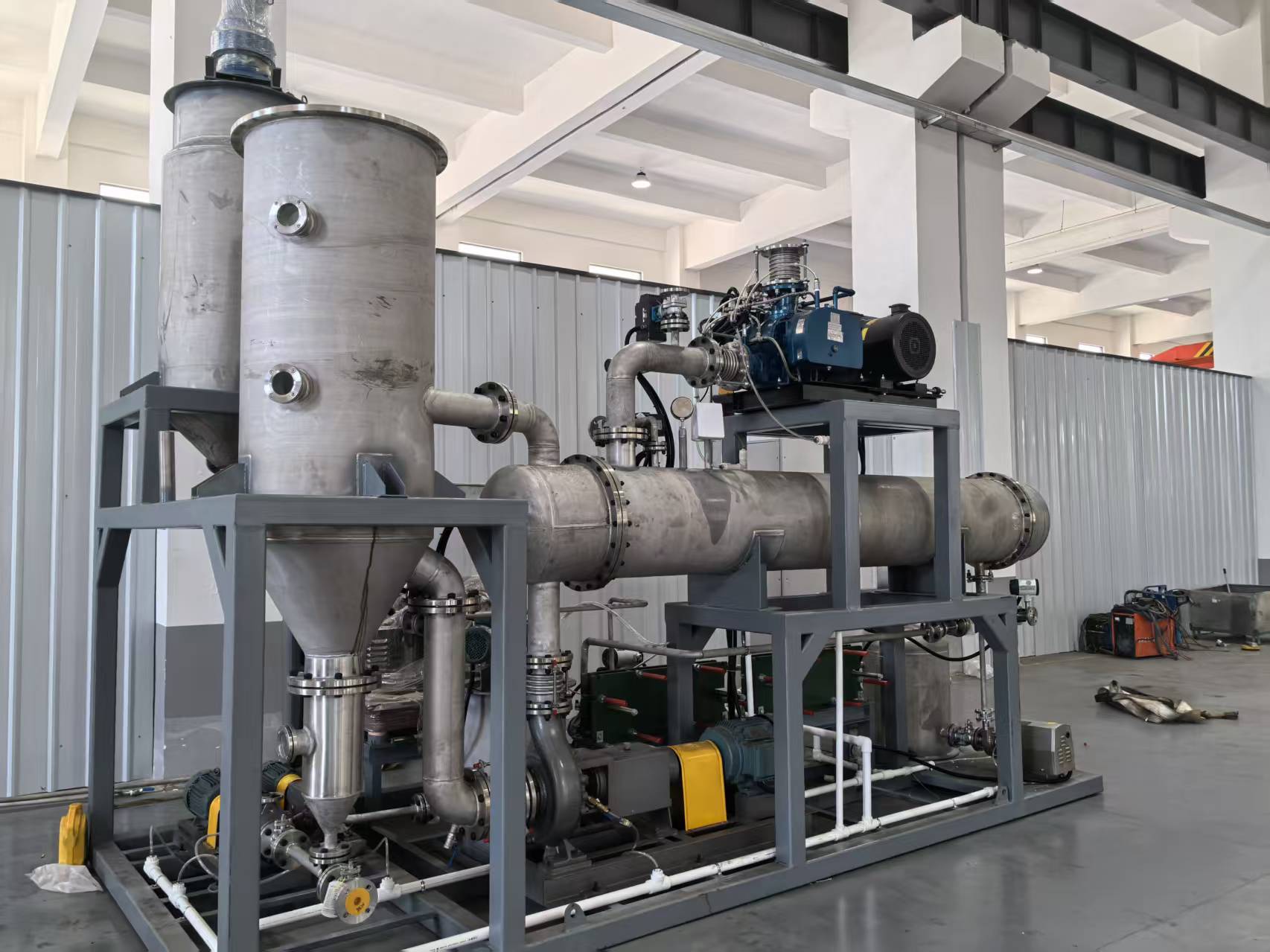
What Is an MVR Evaporator?
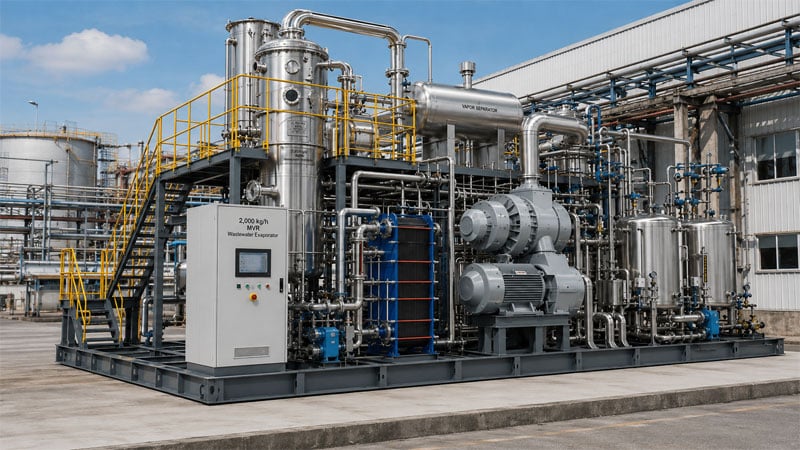
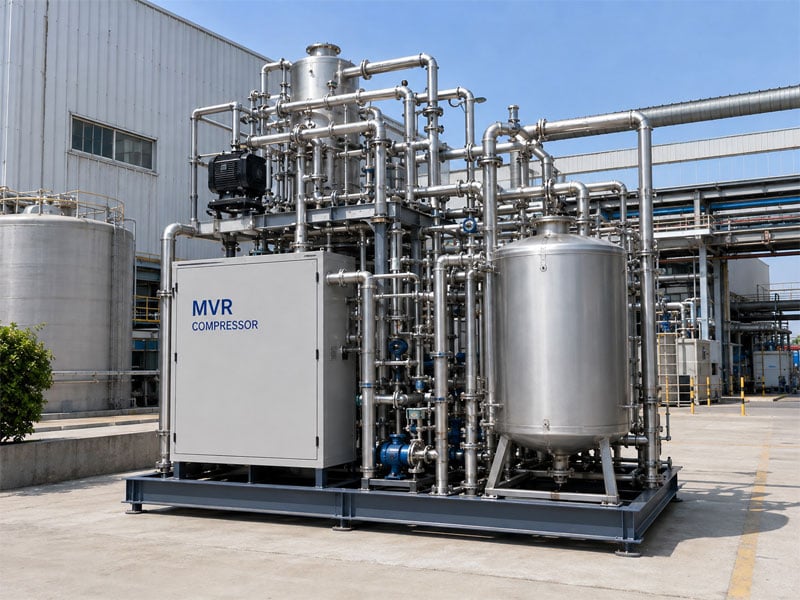
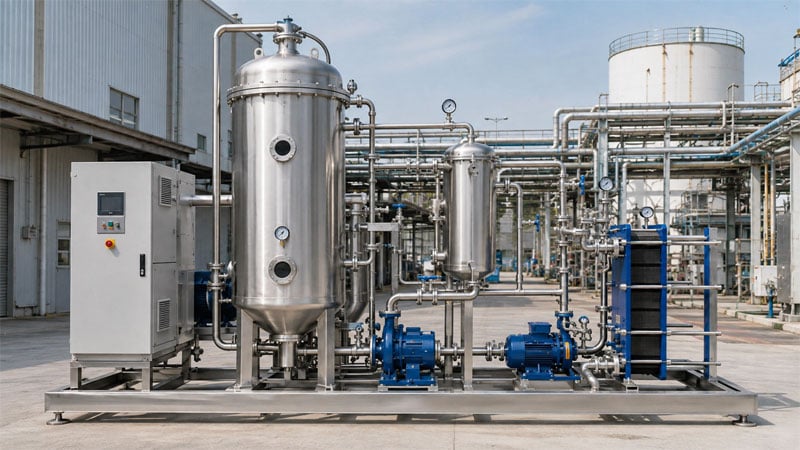
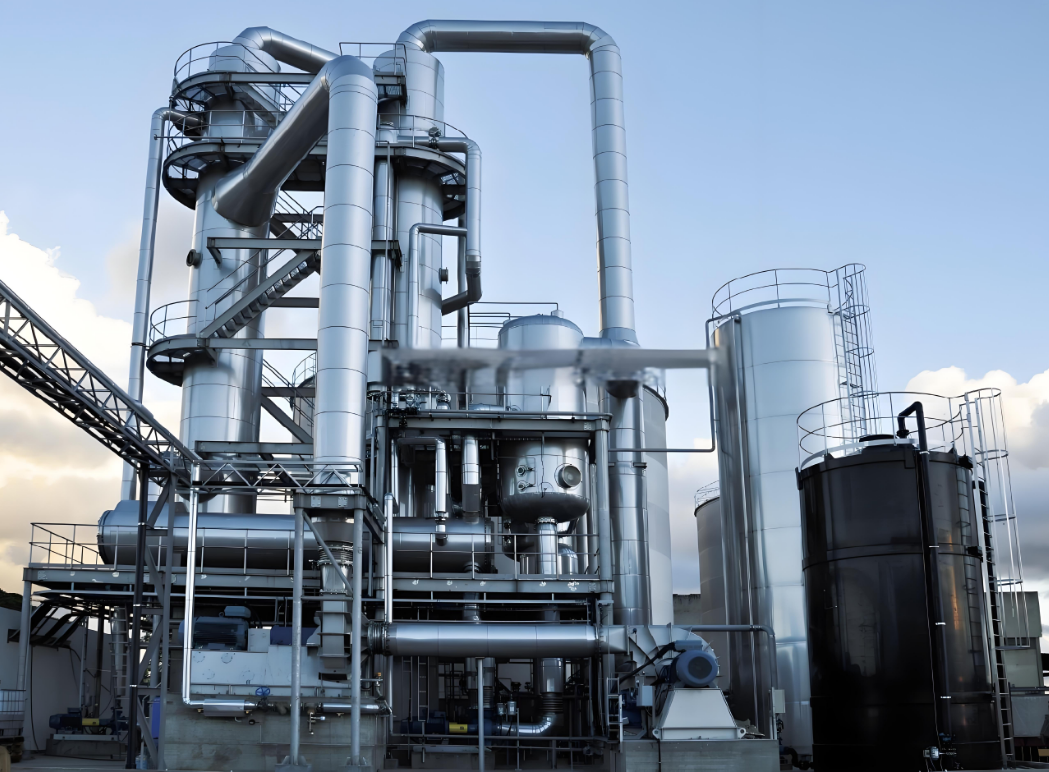
An MVR Evaporator — short for Mechanical Vapor Recompression Evaporator — is an energy-efficient thermal separation system designed for industrial wastewater concentration and zero liquid discharge (ZLD) applications. Unlike conventional steam-driven evaporators, an MVR Evaporator routes the secondary vapor generated during evaporation back into a mechanical compressor, where it is re-pressurized and returned as the primary heat source for the same evaporation stage. This closed-loop vapor recompression cycle dramatically reduces external steam or fuel consumption, making an MVR Evaporator the preferred technology for continuous, high-volume wastewater treatment on sites where electricity is available at competitive rates.
In practice, an MVR Evaporator achieves steam economy ratios equivalent to 8 to 30 or more effects without requiring a live steam supply, positioning it as both a cost-efficiency and infrastructure-flexibility solution for manufacturers operating in water-scarce or discharge-regulated environments. Mechanical vapor recompression technology has matured significantly over the past two decades, displacing multi-effect evaporation in many applications where electricity costs are moderate and steam infrastructure is limited.
Key Product Characteristics
This category covers a broad range of MVR Evaporator configurations, from compact skid-mounted units to large-scale continuous treatment trains. Key technical characteristics shared across the product line include:
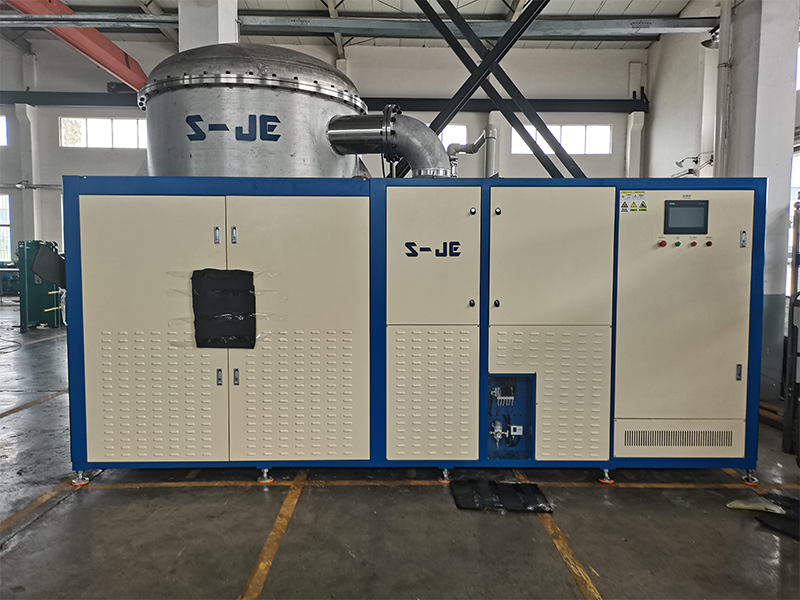
Evaporation Capacity: MVR Evaporator configurations are available from 0.5 T/H for pilot and small-plant applications up to 200 T/H for full-scale ZLD installations, with the skid-mounted variant covering 0.5–5.0 T/H for space-constrained sites.
Operating Temperature: Standard MVR Evaporator units operate within a 45–85°C temperature range, with vacuum low-temperature variants enabling operation at 40–70°C for heat-sensitive process streams.
Energy Performance: Provided that feed water salinity and boiling-point elevation remain within the design envelope, an MVR Evaporator can achieve significant reductions in energy consumption compared to single-effect steam evaporation — though actual energy savings depend on local electricity-to-steam cost ratios and specific process conditions.
Materials of Construction: Available in SS304, SS316L, titanium, and duplex stainless steel to accommodate corrosive feed streams including high-chloride and acid-bearing industrial wastewater.
Automation and Control: PLC-based control systems with HMI interfaces support continuous monitoring, automated cleaning-in-place (CIP) cycles, and remote process visibility — a critical feature for overseas installations with limited on-site engineering support.
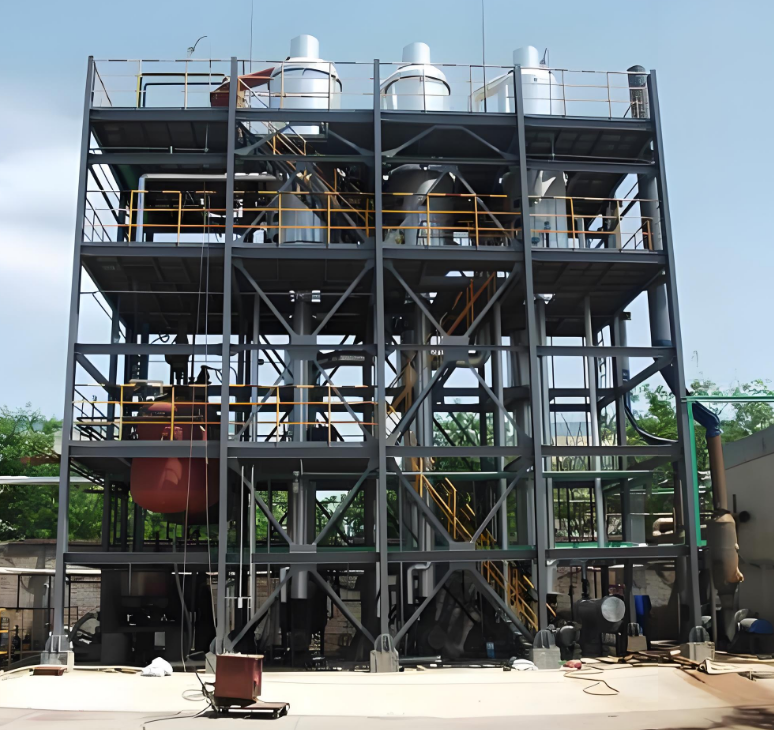
Installation Format: Both modular skid-mounted MVR Evaporator units and site-erected systems are offered, addressing space constraints and remote deployment requirements across Europe, North America, and South America.
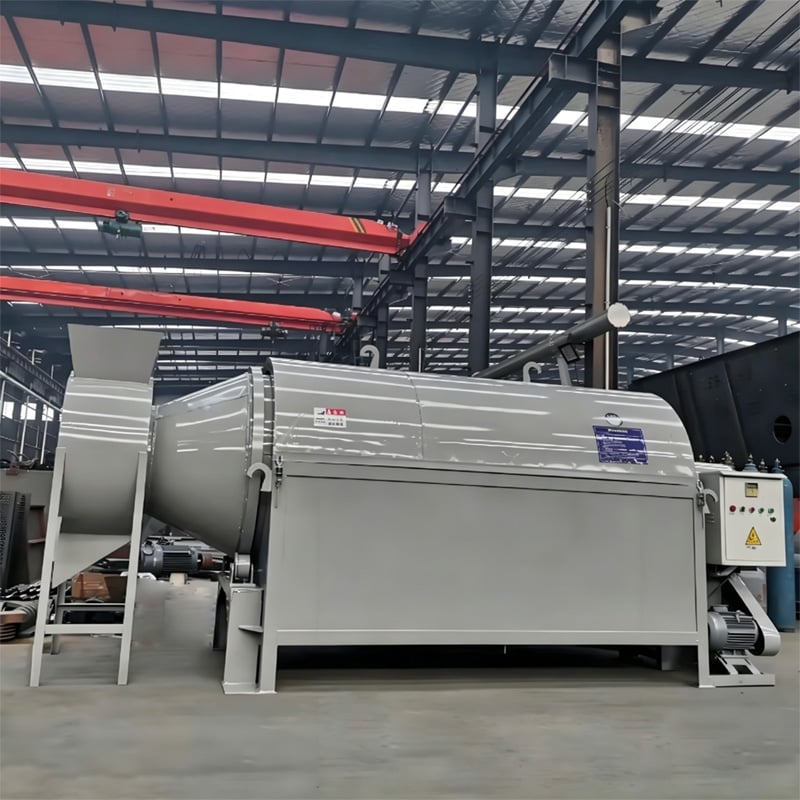
The category also includes complementary thermal treatment systems — single-effect and multiple-effect evaporators, vacuum low-temperature evaporators, salt separation systems, and mother liquor drying systems — providing a complete upstream-to-ZLD treatment chain alongside the core MVR Evaporator product line.
Common Applications
The MVR Evaporator is applied across a broad spectrum of industrial wastewater treatment contexts. The most common deployment scenarios include:
High-Salinity Wastewater Concentration: Industrial effluents with total dissolved solids (TDS) exceeding 10,000 mg/L — from chemical plants, battery manufacturing, and metal surface treatment — are concentrated in an MVR Evaporator before downstream crystallization or disposal.
Zero Liquid Discharge (ZLD) Pre-Concentration: The MVR Evaporator serves as the primary volume-reduction stage in ZLD treatment trains, reducing brine volume before salt crystallization or mother liquor drying. This approach lowers downstream crystallizer loading and overall treatment cost.
Chemical and Petrochemical Effluent: Mixed-salt and organic-containing wastewater streams from chemical manufacturing require a robust MVR Evaporator design with anti-fouling and corrosion-resistant internals to handle variable feed composition reliably.
Food and Beverage Processing: High-volume, moderate-TDS effluents benefit from the continuous operation and low thermal degradation characteristics of forced-circulation MVR Evaporator systems.
Pharmaceutical and Fine Chemical: Heat-sensitive streams are directed to vacuum low-temperature variants rather than a standard MVR Evaporator unit, where evaporation occurs below 70°C to protect temperature-labile components.
Leachate and Landfill Wastewater: Highly variable, high-organic-load leachate streams are concentrated using an MVR Evaporator or multi-effect configurations selected based on feed stream characterization and energy cost structure.
Mining and Mineral Processing: Process water containing heavy metals, sulfates, and high dissolved solids is treated and volume-reduced before discharge or reuse, with MVR Evaporator technology providing the concentration step in full ZLD designs.
How to Choose the Right MVR Evaporator
Selecting the right MVR Evaporator configuration requires balancing several process and site-specific variables. From experience across industrial wastewater projects in Europe, Asia, and the Americas, the following factors consistently determine whether a given MVR Evaporator performs as expected over its operating life:
Feed Stream Characterization: Accurate TDS measurement, scaling tendency (calcium, sulfate, silica content), pH profile, and organic load are the foundation of any reliable MVR Evaporator sizing exercise. Systems sized on incomplete feed data routinely underperform at actual operating conditions — no responsible supplier should provide a performance commitment without a complete feed analysis.
Capacity Range and Turndown: For facilities with seasonal or batch-driven variability in wastewater volume, the MVR Evaporator turndown ratio — typically 50–70% of design capacity while maintaining effluent quality — should be confirmed against the actual production schedule before final specification.
MVR Evaporator vs. Multi-Effect Evaporation: The choice between an MVR Evaporator and conventional multi-effect evaporation is fundamentally a tradeoff between energy savings and operational simplicity. An MVR Evaporator delivers clear advantages in facilities with continuous high-volume treatment requirements and access to moderate-cost electricity. Multi-effect configurations tend to be more forgiving in applications with variable feed composition or sites with abundant low-cost steam. It is also important to recognize that an MVR Evaporator is not a universal energy-saving solution: at high concentration ratios, rising boiling-point elevation increases compressor duty, and in some cases a well-designed multi-effect system may offer more favorable lifecycle economics.
Energy Cost Structure: Facilities in regions with high electricity tariffs require detailed energy modeling before committing to an MVR Evaporator over multi-effect designs. Without quantified steam-versus-electricity cost comparisons at the expected evaporation rate, equipment selection carries material financial risk.
Materials Compatibility: Corrosive feed streams containing high chloride content, low pH, or scaling-prone dissolved minerals require careful specification of MVR Evaporator heat exchanger tube and body materials. Titanium and duplex stainless steel options are available for severe-service applications.
Automation and Support Capability: For overseas manufacturers without specialized in-house maintenance teams, the complexity of MVR Evaporator compressor control — including PID tuning, safety interlocks, and CIP cycle programming — should be explicitly addressed during supplier evaluation.
Why MVR Evaporator Technology Matters for Industrial Manufacturers
Industrial facilities generating high-volume wastewater face converging pressures: rising disposal and hauling costs, increasingly stringent discharge standards, and water scarcity across manufacturing regions. An MVR Evaporator directly addresses these by concentrating waste streams to significantly reduce disposal volume, enabling water recovery for reuse, and supporting ZLD compliance pathways where liquid discharge is regulated or prohibited.
Regulatory frameworks in the European Union and North American markets continue to tighten industrial effluent discharge standards. In some sectors, zero liquid discharge is now a permit requirement rather than a voluntary best practice. Equipment selection decisions for an MVR Evaporator carry 15 to 25-year operating consequences, meaning supplier after-sales capability and spare parts availability are as commercially significant as the initial capital cost comparison.
From an energy economics standpoint, specific energy consumption — measured in kWh per cubic meter of water evaporated — has become a primary competitive metric in thermal evaporation procurement. Buyers in energy-cost-sensitive markets model lifecycle operating costs carefully, and suppliers who provide transparent, verifiable energy benchmarks for their MVR Evaporator product range enable procurement teams to make defensible technology selection decisions rather than accepting unverifiable claims.
The integrated product range in this category — spanning the core MVR Evaporator lineup, multi-effect systems, vacuum low-temperature evaporators, salt separation units, and mother liquor drying systems — allows manufacturers to source a complete ZLD treatment chain from a single engineering supplier. This reduces project coordination risk for greenfield plant builds and capacity expansion projects where seamless integration between treatment stages is essential to achieving compliance performance targets.

 EN