Electroplating operations generate significant volumes of wastewater containing metal ions, acids, bases, and other process chemicals. Rather than treating all wastewater identically and discharging it, forward-thinking facilities are adopting selective electroplating wastewater recycling strategies. The decision about which streams warrant recycling depends on understanding contaminant profiles, treatment complexity, and economic return on investment.

The challenge lies not in whether wastewater reuse is possible, but in identifying which specific process streams justify the capital and operational investment. Different electroplating stages produce vastly different waste compositions. Rinse waters, cooling fluids, and acid pickling streams carry distinct contamination profiles and recovery values. Your facility must evaluate treatment feasibility, regulatory constraints, and the actual water demand in your production environment before committing to recycling infrastructure.
Understanding Electroplating Wastewater Stream Composition
Rinse Water as the Primary Reuse Candidate
Rinse waters generated after electroplating and other metal finishing stages represent the most economically attractive reuse opportunity. These streams contain lower metal ion concentrations and fewer co-contaminants compared to process tanks. After electroplating cycles, parts move through rinse stations to remove excess plating solution, and these waters accumulate residual nickel, copper, zinc, or chromium depending on the plating chemistry. Stream segregation at the point of generation allows facilities to isolate rinse waters separately from higher-strength waste sources.
Rinse waters typically contain 50–500 parts per million of dissolved metals, far below the concentration of spent process baths. Treatment via reverse osmosis (RO) or precipitation can concentrate metallic contamination into a smaller reject stream while producing reusable water suitable for cooling towers, make-up water, or lower-grade washing applications. The reuse of rinse water reduces both freshwater consumption and wastewater treatment burden, creating a compelling economic case even in facilities with moderate water costs.
Process Bath Regeneration and Electroplating Recovery
Electroplating bath regeneration presents a more advanced reuse pathway where treated wastewater is fed back into the plating bath itself. Certain facilities implement closed-loop systems that recover plating metals from rinse overflow and return the active plating ions to the working bath. This approach dramatically reduces both raw material costs and wastewater volume, but requires precise chemical balance and careful monitoring of bath composition. Success depends on understanding the specific electroplating chemistry and installing treatment that maintains bath additives and metal ion ratios.
Electroplating operations cannot tolerate contamination from competing metals or impurities that degrade plating quality. Stream segregation becomes critical when multiple metal finishes operate on the same site. Facilities using copper plating, nickel plating, and chromium plating simultaneously must maintain separate waste streams to avoid cross-contamination. Mixing these streams for consolidated treatment forfeits the opportunity to reuse high-value plating solutions and forces treatment of combined waste more difficult to manage economically.
Stream Segregation and Treatment Technology Selection
Implementing Strategic Stream Segregation
Stream segregation forms the foundation of successful electroplating wastewater recycling. Rather than combining all rinses, overflow, and process washdowns into a single treatment system, best practice divides waste into categories based on contamination level and reuse potential. High-strength plating bath overflows go to precipitation and metal recovery. Intermediate rinses feed to RO or ion exchange systems. Cooling tower blowdown and low-contamination washdowns may receive basic settling before reuse. This segregation multiplies treatment efficiency and reduces overall operational cost.
Segregation requires modest capital investment in separate drain headers, collection sumps, and diversion valves during facility design or retrofit. The investment pays dividends through reduced treatment volume, higher-quality treated water, and recovery of valuable metals. Facilities that commingle waste streams lose this granularity and default to treating everything to the most stringent standard, an economically inefficient approach that obscures the true value of electroplating wastewater recycling.
Reverse Osmosis Technology for Metal Removal
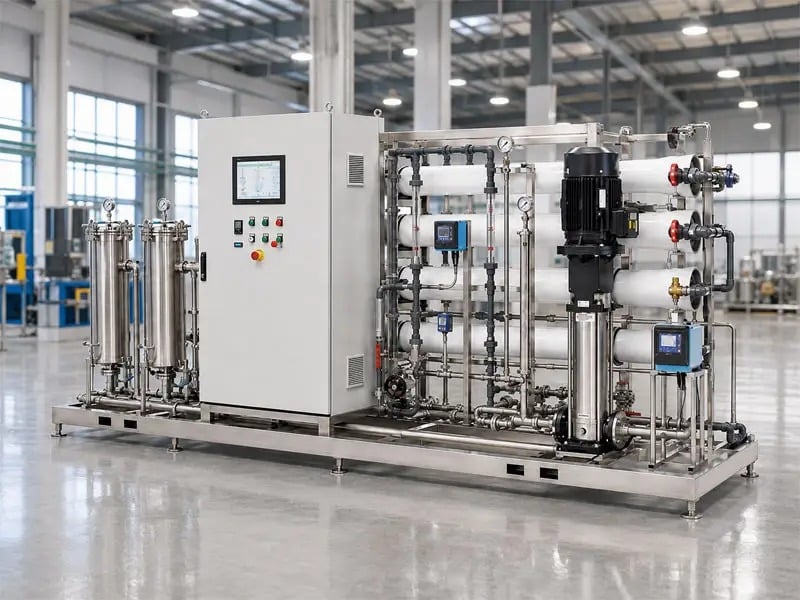
Reverse osmosis technology has become the industry standard for treating segregated electroplating rinse waters. RO membranes reject dissolved salts and metal ions with 90–99% efficiency, depending on membrane type and feed water quality. The permeate produced is clean enough for reuse in cooling systems, secondary rinses, or makeup water for certain process operations. The concentrate returned to the electroplating waste stream contains the removed metals at higher concentration, simplifying subsequent recovery or final treatment. A properly designed RO system converts low-quality wastewater into a usable product while producing a manageable concentrate for handling.
RO performance depends heavily on feed water pretreatment and stream composition. Acidic streams from pickling operations require pH adjustment and scaling prevention before RO introduction. Suspended solids must be removed via multimedia filtration or microfiltration. High-TDS sources may need softening or advanced pretreatment. The investment in robust pretreatment ensures reliable RO operation and extends membrane life, ultimately improving the economics of electroplating reuse systems across the facility.
Economic and Operational Decision Criteria
Evaluating Reuse Economics and Payback Timeline
Determining whether specific electroplating wastewater streams justify recycling requires calculating the return on capital and comparing it to wastewater discharge costs. Measure your baseline freshwater consumption, current wastewater treatment or disposal charges, and the volume of potentially reusable stream from each process area. If your facility discharges 5,000 gallons per day of rinse water and pays $3 per 1,000 gallons for municipal discharge, or if you operate your own treatment plant, the value of reuse becomes quantifiable. Add the cost of treatment equipment, installation, and operation, then model the payback period over a 5–10 year horizon.
Facilities located in water-stressed regions or those facing rising discharge fees see faster payback on electroplating wastewater recycling investments. A facility in the Southwest paying premium water and discharge rates might recover capital investment within 2–3 years. A facility in a region with abundant water and low discharge costs may face a 5–7 year payback and must weigh that against operational benefits like reduced environmental liability, improved corporate sustainability metrics, and resilience to future regulatory tightening. Both scenarios can justify reuse, but the decision framework differs.
Regulatory Compliance and Facility-Specific Constraints
Wastewater discharge permits and local water reuse regulations set boundaries on which electroplating streams merit investment. Some jurisdictions prohibit direct reuse without extensive documentation and monitoring. Others encourage water recycling through permit credits or reduced discharge fees. Your facility must review current permit language and contact regulatory agencies before designing a reuse system. Indirect potable reuse and closed-loop applications within your facility typically face fewer restrictions than schemes involving distribution to neighboring industries.
Electroplating reuse feasibility also depends on production scheduling and seasonal demand variability. A facility with consistent year-round rinse generation and stable cooling tower makeup demand can confidently design a reuse system sized to match average conditions. A seasonal operation with highly variable water needs faces greater complexity in balancing treated water supply against actual demand. In such cases, reuse makes sense only if alternative disposal paths exist for periods when generated water exceeds immediate demand, or if storage capacity is economically justified.
FAQ
Which electroplating waste streams offer the fastest return on reuse investment?
Rinse waters deliver the fastest payback because they require the least aggressive treatment and produce the highest volume of reusable water per dollar invested. If your facility segregates rinse streams and operates with high baseline water costs or discharge fees, treatment via RO or ion exchange typically generates payback within 3–5 years. Bath regeneration systems offer lower per-gallon treatment cost but require higher capital investment and more complex chemistry management, so payback extends to 5–10 years depending on metal value and process sophistication.
Can stream segregation be retrofitted into an existing electroplating facility?
Yes, but retrofit cost and disruption depend on facility layout and drain configuration. Retrofitting requires installing separate collection lines, sumps, and diversion logic into existing plating areas, which can be expensive if floor space is constrained or if drain headers are already embedded. New facilities can incorporate stream segregation and reuse infrastructure at design stage with minimal incremental cost. Many facilities conduct phased retrofits, beginning with the highest-value streams (typically copper or nickel rinses) and expanding to secondary streams as cash flow permits and confidence in the reuse system grows.
What pretreatment is essential before feeding electroplating rinse water to RO?
Multimedia or cartridge filtration to 5 microns is the minimum baseline to remove suspended solids and prevent rapid membrane fouling. Beyond that, pH adjustment may be required to neutral range, and softening or antiscalant dosing might be necessary depending on your water hardness and ionic composition. Acidic streams from pickling or etching operations require neutralization before RO. A comprehensive wastewater analysis and pilot-scale RO testing will reveal your specific pretreatment needs, allowing you to design a system that reliably supports reuse across your electroplating facility.

 EN