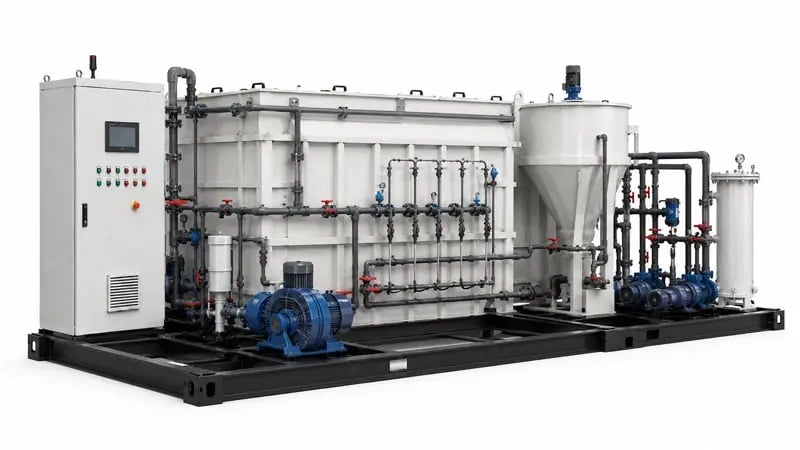
Establishing precise water quality requirements is the foundation of any effective custom water treatment system. When you invest in a custom water treatment solution, you are not simply purchasing equipment; you are defining the performance standards that will govern your operations, compliance posture, and long-term operational costs. Understanding how to set these requirements ensures your system delivers the exact water purity, chemical balance, and consistency your industrial processes demand. Without clear requirements, even the most advanced equipment cannot optimize performance or prevent costly downtime.
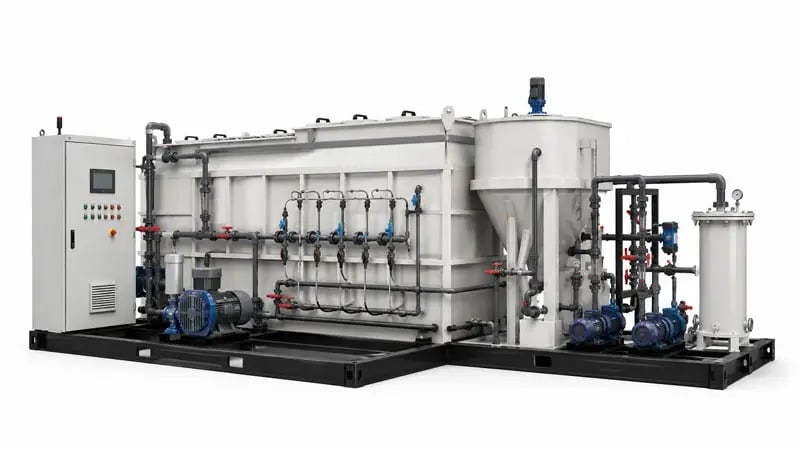
Defining water quality requirements involves more than guessing what your facility might need. It requires systematic analysis of your production processes, regulatory mandates, equipment specifications, and operational realities. The product water specifications you establish will drive every decision downstream: system capacity, treatment technology selection, maintenance protocols, and monitoring frequency. This foundational work prevents mismatches between what your system delivers and what your operations require, ensuring every dollar spent on customization delivers measurable value.
Understanding Core Water Quality Parameters
Conductivity and Dissolved Solids
Conductivity is one of the most critical metrics for defining a custom water treatment system. This parameter measures the water's ability to conduct electrical current, which directly reflects the concentration of dissolved ions and salts. In pharmaceutical manufacturing, semiconductor fabrication, and power generation, conductivity becomes a primary specification because high ionic content can damage equipment, compromise product quality, or reduce thermal efficiency. Your custom water treatment system must be designed to reduce conductivity to precise target ranges, whether you need ultrapure water below 0.1 microsiemens or treated water in the 100–500 range for cooling applications.
When setting conductivity targets, you must distinguish between influent water characteristics and effluent specifications. Influent water—the untreated source entering your system—typically contains varying levels of dissolved minerals and contaminants depending on source and season. Your custom water treatment system design must account for seasonal variations and worst-case scenarios, not just average conditions. Many facilities discover too late that their equipment cannot handle peak conductivity loads during dry seasons, leading to system failures or out-of-specification product water when production demands peak.
Product Water Specifications
Product water quality encompasses far more than conductivity alone. Total dissolved solids (TDS), pH range, hardness, silica content, and organics all require definition based on your process requirements. A pharmaceutical manufacturer setting water quality requirements for a custom water treatment system must ensure product water meets pharmacopeial standards, while a cooling water application allows broader tolerance ranges. The difference in specification stringency drives fundamentally different design choices, equipment selections, and operational complexity.
Many organizations define product water specifications by copying industry standards or competitor practices without analyzing their actual needs. This approach often leads to over-specification in some parameters and under-specification in others. Instead, work backward from your critical process steps. If your application requires ultrapure water, your custom water treatment system must include electrodeionization, reverse osmosis, or polishing steps. If general industrial use allows higher tolerance, your system design can be simpler and more cost-effective.
Designing for Customization and Flexibility
Customization Driven by Process Integration
Customization in water treatment system design means tailoring every component to match your specific operational context. This includes flow rate capacity, pre-treatment stage selections, technology combinations, polishing methods, and monitoring integration. When defining water quality requirements for a custom water treatment system, you must specify not just the target values but also how tightly the system must hold those values during operation. Some processes tolerate wider quality swings; others demand constant precision. This distinction determines whether your system includes active feedback controls, redundant treatment stages, or real-time monitoring sensors.
The customization process begins by mapping your influent water source. Municipal water, groundwater, surface water, and recycled process water each present different contamination profiles and treatment challenges. A custom water treatment system designed for municipal water cannot necessarily be repurposed for groundwater without redesign. Similarly, if your facility plans future production changes or expansion, your system customization must anticipate those needs or include scalability features. Front-end analysis prevents costly retrofits later.
Performance Margins and Operating Conditions
When setting water quality requirements, always build in realistic operating margins. Your custom water treatment system should maintain product water specifications during normal operations while accounting for influent variability, membrane aging, seasonal changes, and equipment fouling. A well-designed system does not run at maximum capacity continuously; it includes buffer margin for degradation and variability. If your minimum product water conductivity target is 1.0 microsiemens per centimeter, your system design should typically achieve 0.5 to 0.8 under normal fouled conditions, giving operational headroom before specifications drift out of range.
Environmental temperature, feed water temperature, and ambient operating conditions all affect how a custom water treatment system performs relative to design specifications. Equipment designed for controlled indoor environments may underperform outdoors. Systems handling elevated temperature water require different membrane materials and may lose efficiency at higher feed temperatures. When defining requirements, specify the operating conditions your system will face—this information is essential for proper design and realistic performance expectations.
Integration with Monitoring and Compliance
Regulatory and Operational Requirements
Setting water quality requirements must account for both regulatory compliance and operational necessity. Pharmaceutical manufacturers must meet USP or EP water standards; power plants must control conductivity to prevent corrosion and scaling; semiconductor fabs require ultra-low particulate and ionic content. Your custom water treatment system design must ensure consistent compliance, not just occasional achievement of target values. This means specifying monitoring frequency, alarm setpoints, validation protocols, and documentation requirements as part of your initial requirement definition.
Beyond external regulations, internal operational standards matter equally. If your process quality control accepts water samples only at shift start, your custom water treatment system might operate without continuous monitoring. If your production line runs 24/7 with real-time quality implications, your system requires continuous or frequent monitoring with automated alarms. These operational nuances affect system design, instrumentation choices, and overall customization investment. Clarifying them early prevents specification mismatches that emerge during commissioning or first production runs.
Testing, Documentation, and Performance Validation
When you finalize water quality requirements for a custom water treatment system, you must establish how you will verify the system meets those requirements. Will you conduct bucket sampling, inline conductivity monitoring, lab-based analysis, or all three? What constitutes acceptable variance during normal operation versus an alert condition? A clear testing protocol prevents disputes during system validation and provides objective evidence that your system performs as intended. Documentation standards matter too—regulatory agencies and internal auditors both expect systematic records showing your custom water treatment system consistently delivers specified water quality.
FAQ
What is the most critical parameter when setting water quality requirements for a custom water treatment system?
Conductivity is typically the most critical parameter because it reflects dissolved ionic content that affects nearly all water-dependent processes. However, the single most important step is understanding your specific application. Pharmaceutical uses prioritize USP compliance; cooling applications focus on hardness and scale potential; ultrapure applications demand multiple parameters simultaneously. Start by working backward from your process requirement, not from industry defaults.
How do seasonal variations affect custom water treatment system design and water quality specifications?
Seasonal variations in source water quality directly impact your custom water treatment system's ability to meet design specifications. Winter snowmelt raises suspended solids; summer heat increases mineral concentration; autumn leaf decay adds organics. Your system must be sized to handle worst-case seasonal influent while maintaining product water specifications year-round. Many facilities discover their systems underperform during peak season because design was based on average conditions rather than peak load scenarios.
Should water quality requirements for a custom water treatment system include buffer margins beyond minimum specifications?
Yes, buffer margins are essential. Your custom water treatment system should achieve product water quality well below minimum specifications under normal operating conditions. This margin accounts for membrane fouling, seasonal variation, temperature effects, and aging. If your target is conductivity below 1.0 microsiemens, design for 0.5 to 0.8 under normal fouled conditions. Without margin, normal equipment degradation causes specification violations and operational disruptions during regular equipment cycles.

 EN