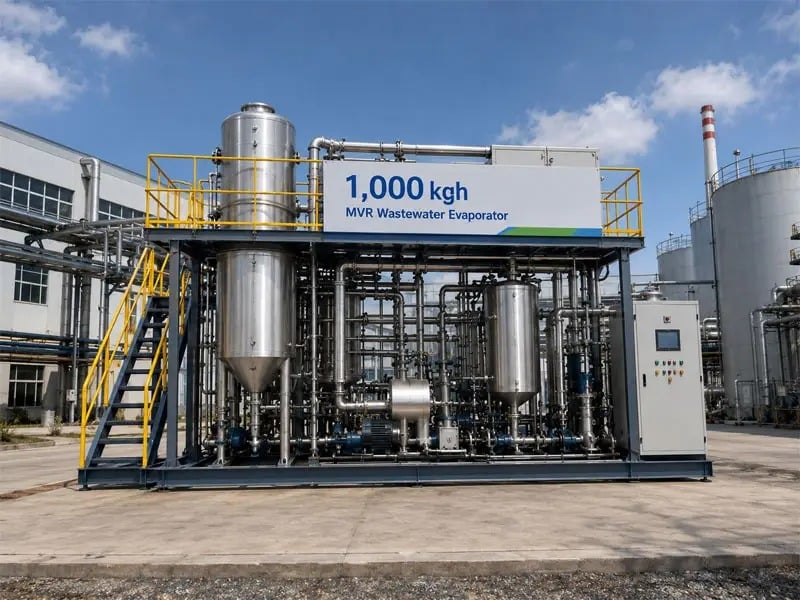
Selecting the right industrial evaporator manufacturer requires understanding more than just equipment specifications. The decision hinges on balancing deep process design expertise with proven fabrication capabilities, rigorous testing protocols, and reliable aftermarket service. Many companies focus exclusively on one dimension—perhaps equipment scale or material selection—while overlooking the integrated knowledge required to deliver systems that perform consistently under demanding industrial conditions.
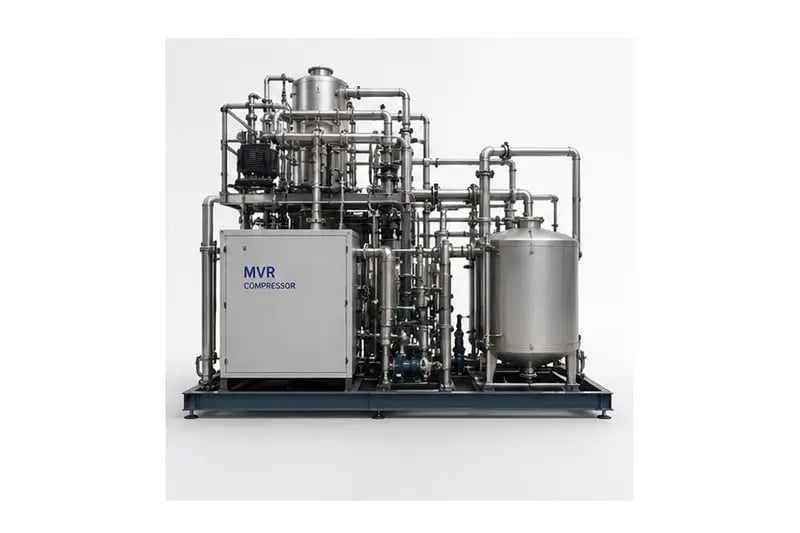
Process design and equipment fabrication represent distinct skill sets within industrial evaporator manufacturing. A manufacturer demonstrating excellence in process design can optimize heat transfer efficiency, minimize energy consumption, and ensure product quality outcomes. Meanwhile, superior fabrication reflects investment in welding standards, material sourcing, quality control systems, and production infrastructure. The strongest suppliers integrate both capabilities, ensuring that theoretical process advantages translate into practical, durable equipment.
Process Design as a Core Differentiator
Thermal Efficiency and System Optimization
Advanced process design defines how effectively an evaporator system recovers waste heat, manages vapor flows, and maintains consistent product concentration. Leading industrial evaporator manufacturers employ computational modeling, pilot-scale experimentation, and field data analysis to optimize multiple variables simultaneously. This expertise directly impacts operating costs, throughput capacity, and product consistency. Design competency separates vendors who replicate standard configurations from those who tailor solutions to specific waste streams, feed characteristics, and production constraints.
Process design quality also determines how well a system adapts to fluctuating feedstock conditions. An evaporator optimized for a narrow feedstock range may fail economically when processing streams with varying salinity, viscosity, or heat-sensitive components. Manufacturers with deep process expertise build flexibility into designs, allowing systems to maintain performance across realistic operational variability. This design resilience prevents costly retrofits and process failures downstream.
Customization and Application-Specific Solutions
Standard equipment designs rarely deliver optimal results for specialized applications. Manufacturers demonstrating strong process design capabilities conduct thorough application analysis before recommending equipment configurations. This includes evaluating feed composition, thermal sensitivity, desired product recovery, and environmental discharge limits. Customized process design ensures that the evaporator system fits seamlessly into the client's broader production environment, reducing commissioning time and operational surprises.
Fabrication Excellence and Quality Assurance
Material Selection and Construction Standards
Fabrication quality determines whether an evaporator system will operate reliably for its intended lifespan or require premature replacement due to corrosion, mechanical failure, or component degradation. Superior industrial evaporator manufacturers maintain rigorous material specifications, welding certifications, and construction protocols aligned with industry standards such as ASME, PED, or equivalent frameworks. Material selection reflects not only corrosion resistance but also thermal conductivity, structural integrity under vacuum conditions, and compatibility with aggressive cleaning chemicals.
The relationship between process design and fabrication becomes evident in pressure vessel construction, heat exchanger tube selection, and separator chamber design. A theoretically optimal process design falters if fabrication tolerances are loose, welds contain defects, or material composition deviates from specifications. Leading manufacturers invest in ultrasonic testing, radiographic inspection, and pressure decay tests to validate fabrication integrity before equipment ships to the site.
Production Consistency and Scalability
Fabrication excellence requires consistent process controls across multiple production runs. An industrial evaporator manufacturer capable of producing identical quality across ten units or one hundred units demonstrates operational maturity beyond casual equipment builders. Scalable fabrication reflects documented workflows, skilled labor management, tooling investment, and quality metrics that prevent drift in construction standards. This consistency reduces variability in field performance and simplifies spare parts commonality across installations.
Testing, Validation, and Service Integration
Pre-Delivery Testing and Performance Validation
Rigorous testing protocols separate manufacturers committed to reliability from those prioritizing quick shipment. Comprehensive testing includes pressure tests, vacuum integrity checks, thermal performance verification, and operational trials under simulated load conditions. Leading industrial evaporator manufacturers conduct factory acceptance tests with client representatives present, documenting performance data and confirming that delivered equipment matches design specifications. This transparency builds confidence and prevents disputes about system capability after installation.
Testing serves a dual purpose: validating that fabrication meets design intent and identifying potential field issues before they occur. Thermal imaging during testing reveals unexpected hot spots. Vacuum decay monitoring identifies minor leaks in system seals. Vibration analysis during operational trials detects bearing wear or imbalance conditions. Comprehensive testing transforms potential failure modes from costly field surprises into understood risks with mitigation strategies.
Service, Support, and Continuous Improvement
Post-delivery service distinguishes manufacturers focused on customer outcomes from equipment suppliers focused only on transaction completion. Quality service includes rapid spare parts availability, trained field technicians, commissioning support, and performance optimization guidance. Industrial evaporator manufacturer partnerships extend beyond installation, encompassing troubleshooting, efficiency audits, and proactive maintenance recommendations. Manufacturers with robust service networks gather field data that informs ongoing design refinement and helps clients maximize equipment lifespan and performance.
Service integration also enables predictive maintenance capabilities, where historical performance data and operational patterns help clients anticipate maintenance needs before failures occur. Manufacturers providing data monitoring systems and performance analytics help clients optimize energy efficiency and predict when equipment component replacement becomes economically justified. This service-driven approach creates value throughout the equipment lifecycle, not merely at the moment of purchase.
FAQ
What distinguishes process design capability from fabrication capability in industrial evaporator manufacturers?
Process design focuses on optimizing thermal efficiency, vapor flow management, heat recovery, and product concentration control through engineering analysis and system optimization. Fabrication involves material sourcing, welding execution, pressure vessel construction, and quality control. A manufacturer excelling in process design may lack fabrication infrastructure, while a skilled fabricator might offer only standard designs without customization. Superior industrial evaporator manufacturers integrate both disciplines, ensuring theoretical advantages translate into durable, reliable equipment.
How does testing validate that an industrial evaporator manufacturer's design and fabrication align with performance expectations?
Factory acceptance testing includes pressure validation, vacuum integrity checks, thermal performance trials, and operational simulations that confirm equipment meets design specifications before shipment. Testing reveals fabrication defects, design assumptions that require adjustment, and unexpected operating behaviors in controlled conditions. This early detection prevents costly field failures, reduces commissioning time, and provides documented evidence that delivered equipment performs as promised. Leading manufacturers conduct testing with transparency, involving clients in result interpretation and performance verification.
Why is post-delivery service and support important when selecting an industrial evaporator manufacturer?
Service quality determines whether customers achieve projected equipment lifespan, efficiency, and operational reliability. Comprehensive service includes spare parts availability, field technical support, commissioning assistance, and performance monitoring. Manufacturers gathering field data through service interactions continuously refine designs and help customers optimize energy consumption and maintenance strategies. Service-driven partnerships extend equipment value beyond initial purchase, enabling predictive maintenance, efficiency improvements, and informed upgrade planning throughout the system lifecycle.

 EN