Industrial wastewater reuse has become a critical strategy for manufacturing facilities seeking to reduce freshwater consumption, lower operational costs, and meet environmental compliance standards. After biological treatment removes organic compounds and reduces biochemical oxygen demand, the treated water still contains dissolved solids, residual nutrients, and microbial contaminants that prevent direct reuse in industrial processes or environmental discharge. Understanding the polishing steps necessary after biological treatment is essential for designing cost-effective and reliable wastewater recycling systems that can safely return reclaimed water into production cycles.
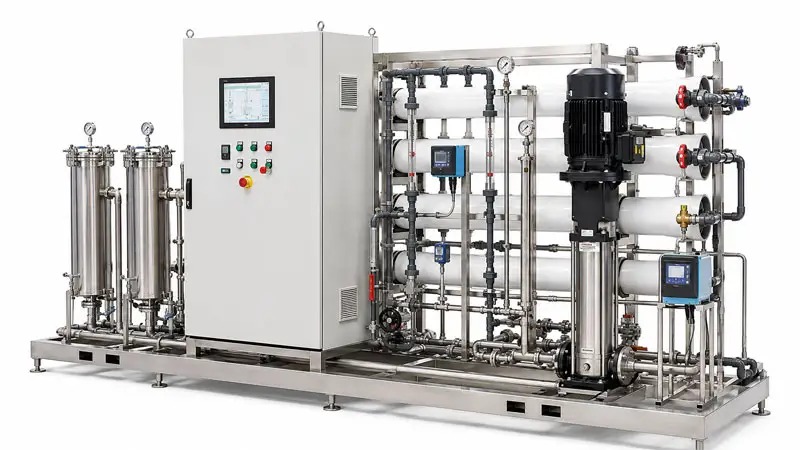
Biological treatment systems remove much of the organic load but cannot eliminate the full spectrum of contaminants that determine water quality for reuse applications. This gap between what biological treatment achieves and what end-use applications require is precisely where polishing treatment steps become necessary. The selection of polishing technologies depends on the source wastewater characteristics, target reuse applications, regulatory requirements, and economic constraints specific to each facility.
Understanding Biological Treatment Limitations and Polishing Needs
Activated sludge systems, membrane bioreactors, and lagoon-based biological treatment remove readily biodegradable organic matter through microbial metabolism, but they have inherent limitations. These systems cannot effectively eliminate dissolved salts, hardness minerals, pharmaceuticals, heavy metals, or certain industrial-specific compounds that resist biological degradation. Additionally, residual suspended solids and biomass particles escape biological treatment and carry turbidity, color, and microbial load into the treated effluent.
Why Polishing Matters for Industrial Wastewater Reuse
Industrial wastewater reuse applications such as cooling tower makeup, boiler feed water, process recirculation, or landscape irrigation each have specific quality thresholds. Cooling towers require low hardness and silica to prevent scale formation; boiler systems demand extremely low suspended solids and dissolved minerals; irrigation demands microbial safety and acceptable salt levels. Without polishing after biological treatment, reclaimed water fails these requirements, forcing facilities to blend with freshwater or abandon reuse plans entirely. Polishing ensures the biological effluent meets application-specific quality standards, making industrial wastewater reuse economically viable and operationally dependable.
Primary Polishing Technologies: Membrane Filtration and Advanced Oxidation
Ultrafiltration (UF) for Particle and Microbial Removal
Ultrafiltration is a pressure-driven membrane process with pore sizes between 0.01 and 0.1 micrometers, effective at removing suspended solids, colloids, and most microorganisms including bacteria and viruses. In the context of industrial wastewater reuse after biological treatment, UF serves as a critical barrier between the biological reactor and downstream polishing stages. UF polishing removes the residual biomass, turbidity, and fine particles that biological treatment cannot completely eliminate. This pre-polishing step protects downstream equipment such as RO membranes from fouling and extends system life significantly. UF systems require regular cleaning and membrane replacement, but their operational simplicity and reliability make them the first choice for most industrial wastewater reuse applications following biological treatment.
Reverse Osmosis (RO) for Dissolved Solids Removal
Reverse osmosis operates at higher pressures than UF and removes dissolved ions, salts, and smaller molecules by forcing water through membranes with pore sizes near 0.0001 micrometers. RO polishing is necessary when industrial wastewater reuse demands very low conductivity, minimal hardness, or salt removal for sensitive applications like ultrapure water production or boiler feed. However, RO is not always required; many cooling tower and irrigation reuse scenarios achieve acceptable performance with UF polishing alone. The decision to include RO depends on the final water quality targets and the economics of operating higher-pressure systems with associated energy costs and concentrate disposal challenges.
Sequential Polishing Design: From Biological Effluent to Reusable Water
Multi-Barrier Approach to Industrial Wastewater Reuse
The most reliable industrial wastewater reuse systems employ sequential polishing rather than relying on a single treatment step after biological treatment. A typical flow consists of biological reactor discharge into clarification or settling, followed by UF polishing to remove suspended solids and microorganisms, then optional granular activated carbon for odor and color improvement, and finally RO if dissolved salts must be minimized. This multi-barrier strategy ensures robust performance across varying feedwater quality, reduces risk of treatment failure, and maximizes reuse reliability. Each polishing step removes specific contaminant classes, creating redundancy that protects downstream processes and end-use applications.
Integrating Polishing with Biological Treatment System Selection
Facilities planning industrial wastewater reuse should select biological treatment and polishing technologies as an integrated system rather than adding polishing as an afterthought. Membrane bioreactors, which combine biological treatment with membrane filtration in a single vessel, eliminate the need for separate clarification and UF polishing steps. This compact approach reduces footprint and capital cost for facilities with space constraints. Conversely, conventional activated sludge systems paired with separate clarification, UF, and RO stages offer modularity and lower energy intensity for facilities with adequate space and lower quality targets. The choice depends on site-specific factors, total cost of ownership, and operational complexity tolerance.
Quality Standards and Regulatory Compliance for Reclaimed Water
Application-Specific Polishing Requirements
Industrial wastewater reuse for cooling tower applications typically requires turbidity below 2 NTU and biological polishing sufficient to control legionella risk, achievable with UF alone. Boiler feed water demands turbidity below 0.5 NTU, dissolved solids below 100 mg/L, and often RO polishing to meet these stringent criteria. Process water for manufacturing may tolerate higher contaminant levels depending on the specific industrial process. Irrigation reuse for landscaping must meet microbiological safety standards, often requiring UV disinfection or chlorination after UF polishing. Understanding these application-specific thresholds drives the design of the polishing strategy after biological treatment, ensuring industrial wastewater reuse achieves both cost-effectiveness and compliance.
Regulatory and Reuse Framework Considerations
Many jurisdictions have established reclaimed water quality standards that specify minimum polishing requirements after biological treatment. Some regulations mandate specific contaminant limits for industrial wastewater reuse in certain applications, while others provide flexibility based on risk assessment. Facilities must verify local and regional regulations governing reclaimed water quality before finalizing polishing design. International standards such as ISO 16075 provide guidance on reclaimed water safety, and compliance with these standards or local equivalents ensures that industrial wastewater reuse meets regulatory approval and reduces liability risk.
FAQ
Is UF polishing alone sufficient for most industrial wastewater reuse applications?
UF polishing is sufficient for many industrial wastewater reuse applications, particularly cooling tower makeup and non-potable irrigation, where dissolved salts are not a primary concern. However, if the application requires very low conductivity or dissolved solids removal, RO polishing becomes necessary. The decision depends on specific quality requirements, local water costs, and energy availability. Consulting with a wastewater treatment specialist helps determine whether UF alone or a combined UF-RO system best serves your industrial wastewater reuse objectives.
How often do polishing membranes require replacement after biological treatment?
Membrane lifespan depends on feedwater quality from the biological reactor, cleaning frequency, and operational practices. UF membranes typically last 3 to 7 years with regular maintenance, while RO membranes last 5 to 10 years. Facilities practicing industrial wastewater reuse should establish regular monitoring of differential pressure and permeate quality to detect membrane degradation early. Preventive replacement before complete failure reduces unexpected downtime and ensures consistent reused water quality for your industrial processes.
Can polishing steps be bypassed to reduce industrial wastewater reuse system costs?
Bypassing polishing steps may reduce initial capital investment but increases operational risk and long-term costs through equipment fouling, failed reuse applications, and potential regulatory non-compliance. Industrial wastewater reuse systems that omit necessary polishing often experience reduced equipment lifespan, higher maintenance expenses, and ultimately require retrofitting with polishing technology anyway. A properly designed polishing strategy after biological treatment is a cost-effective investment that ensures reliable, sustainable industrial wastewater reuse performance over the system's lifetime.

 EN






