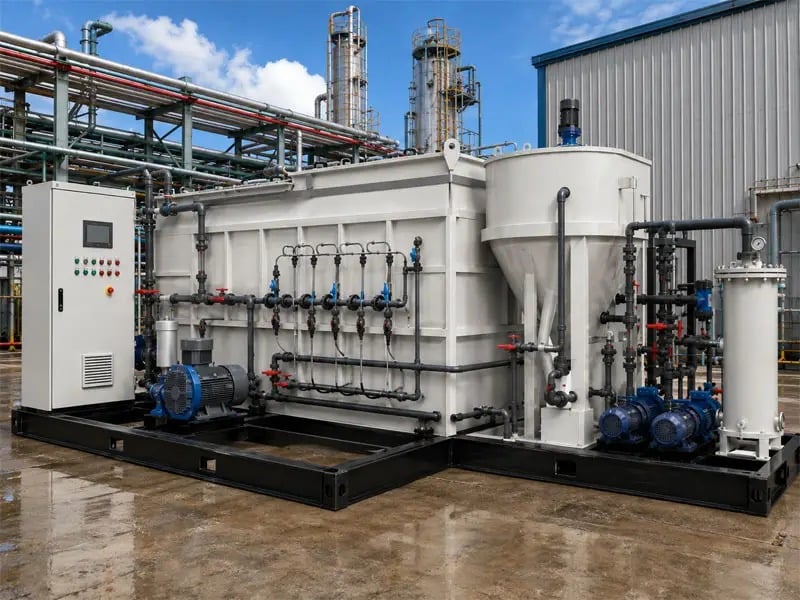
An mbbr wastewater treatment system represents a significant advancement in biological treatment technology, offering industrial and municipal facilities a reliable solution for managing complex wastewater streams. The moving bed biofilm reactor, commonly referred to as MBBR, integrates suspended growth and attached growth treatment principles into a single, efficient process. This hybrid approach enables facilities to achieve consistent treatment performance while maintaining operational flexibility and reducing overall capital and operational costs compared to conventional activated sludge systems.
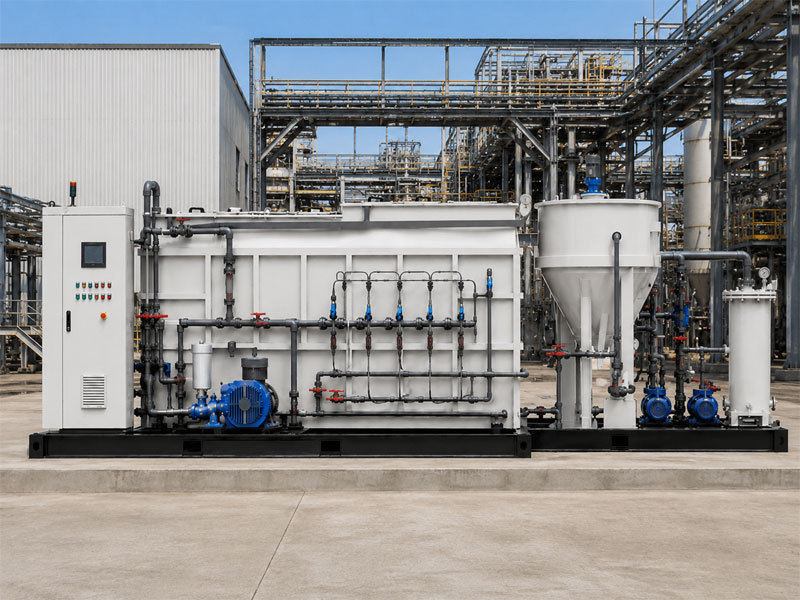
The core innovation of this technology lies in its use of specialized biofilm carriers that remain in constant motion within the treatment basin. These carriers provide an enormous surface area for biofilm growth while maintaining dynamic mixing conditions that optimize oxygen transfer and nutrient distribution. Understanding how biofilm carriers function within the MBBR framework is essential for facility operators and engineers seeking to implement or optimize biological treatment processes.
Understanding Biofilm Carriers in MBBR Systems
What Are Biofilm Carriers and Their Function
Biofilm carriers are specialized plastic or polymer structures designed to support the attachment and growth of microorganisms in moving bed biofilm reactor systems. Each carrier unit provides extensive surface area in a compact form, typically ranging from 500 to 800 square meters of surface area per cubic meter of carrier volume. The carriers float and move freely throughout the treatment basin due to air circulation from diffusers located at the tank bottom, creating continuous motion that prevents biofilm clogging and promotes uniform treatment conditions.
The design of biofilm carriers incorporates multiple pores, channels, and textured surfaces that encourage microbial colonization while maintaining adequate void space for liquid and air movement. This structural configuration ensures that the biofilm population remains active and efficient throughout the treatment process. The carriers themselves are typically manufactured from polyethylene or polystyrene, materials selected for their durability, cost-effectiveness, and biocompatibility with diverse microbial communities.
Mechanical Motion and Its Benefits
The continuous motion of biofilm carriers within the reactor basin creates several critical advantages for biological treatment processes. As carriers move through the wastewater, they generate turbulent mixing that enhances oxygen transfer efficiency and distributes substrate—the organic compounds that microorganisms require for metabolism—evenly throughout the treatment volume. This dynamic environment prevents dead zones where treatment might be incomplete or inefficient.
The mechanical action also naturally scours away excess biofilm that might otherwise accumulate to detrimental thicknesses, maintaining an optimal biofilm thickness of typically 50 to 200 micrometers. This self-regulating mechanism ensures that the biofilm remains in the sweet spot where oxygen and nutrient diffusion into the deeper biofilm layers remains adequate while still providing robust microbial populations for robust biological treatment results.
Biological Treatment Processes Within MBBR Systems
Aerobic and Anoxic Treatment Zones
Modern MBBR systems can be configured with both aerobic and anoxic zones, enabling comprehensive biological treatment that removes organic carbon, nitrogen, and phosphorus compounds. In the aerobic zone, dissolved oxygen supports heterotrophic microorganisms that consume organic matter while autotrophic nitrifiers oxidize ammonia to nitrite and nitrate. The carriers provide surface area for these microbial communities to thrive while maintaining the precise environmental conditions each group requires.
When systems incorporate anoxic zones without dissolved oxygen, the biofilm carriers support denitrifying bacteria that convert nitrate to harmless nitrogen gas. This nitrogen removal capability is particularly valuable for facilities treating high-strength wastewater or facing stringent regulatory nitrogen limits. By combining aerobic and anoxic treatment zones within a single MBBR system, operators achieve comprehensive biological treatment that would otherwise require multiple separate reactor vessels.
Biofilm Community Development
The biofilm that develops on carriers becomes an organized microbial community containing multiple species with complementary metabolic capabilities. This community structure creates a miniature treatment ecosystem where fast-growing heterotrophs consume readily available organic compounds while slower-growing nitrifiers and denitrifiers establish themselves in deeper biofilm layers. The result is a treatment process that remains stable even as influent wastewater composition varies day to day.
Biofilm development typically requires one to four weeks from system startup to achieve full treatment capacity, depending on loading rates and environmental conditions. Once established, the biofilm population becomes remarkably resilient to operational variations and shock loads that might upset suspended growth systems. This stability translates directly into consistent effluent quality and reduced operational surprises for facility teams.
Performance Advantages and Operational Optimization
Treatment Efficiency and Capacity
MBBR systems achieve superior volumetric treatment capacity compared to conventional activated sludge processes by combining attached and suspended growth mechanisms within a single basin. The high surface area provided by biofilm carriers supports biomass concentrations exceeding 10 grams per liter, whereas traditional systems typically operate at 2 to 4 grams per liter. This biomass density advantage allows MBBR systems to treat equivalent or greater wastewater volumes in substantially smaller reactor footprints, reducing real estate requirements and construction costs.
Carriers also enable superior treatment of shock loads and variable influent conditions because the biofilm matrix protects microorganisms from transient toxic exposures while allowing the overall system to maintain treatment performance. This resilience reduces the need for oversizing treatment systems with excessive capacity buffers to handle worst-case scenarios, making MBBR an economically attractive choice for facilities with variable wastewater flows.
Operational and Maintenance Considerations
Operating an MBBR wastewater treatment system requires careful attention to carrier fill fraction, typically maintained between 50 and 70 percent of reactor volume to ensure optimal motion and treatment performance. Operators monitor dissolved oxygen levels, aeration rates, and mixed liquor suspended solids to maintain stable conditions, though MBBR systems generally require less operational complexity than suspended growth alternatives. The self-scourring biofilm property significantly reduces sludge accumulation, lowering solids handling and disposal costs compared to conventional systems.
Biofilm carriers may require periodic inspection for buildup of inorganic materials or excessive biofilm accumulation, particularly in facilities treating high-strength industrial wastewater. However, this maintenance is minimal compared to the clarifier and sludge management demands of conventional systems. Many modern installations incorporate automated fill-fraction monitoring and aeration control systems that optimize operational parameters continuously.
FAQ
What is the typical lifespan of biofilm carriers in MBBR systems?
Biofilm carriers are engineered for long-term service life, typically lasting 15 to 20 years or longer when maintained properly. The polymer materials withstand continuous exposure to wastewater, mechanical abrasion from motion, and microbial activity without significant degradation. Periodic inspection can identify any carriers showing damage or excessive wear, allowing for targeted replacement while maintaining system operation.
How do biofilm carriers handle seasonal variations in wastewater characteristics?
The biofilm communities that develop on carriers demonstrate remarkable adaptability to seasonal changes in influent composition, temperature, and loading rates. The diverse microbial populations within the biofilm contain organisms suited to different metabolic scenarios, and the matrix structure provides protection during transition periods. This flexibility allows MBBR systems to maintain consistent treatment performance across seasons without major operational adjustments.
Can existing treatment facilities retrofit MBBR carriers into existing basins?
Many facilities can retrofit biofilm carriers into existing basins with relatively modest modifications to aeration systems and dissolved oxygen controls. However, successful retrofit requires careful evaluation of basin geometry, current aeration infrastructure, and treatment objectives. Facilities considering this upgrade should work with experienced engineers to determine feasibility and develop implementation strategies that minimize operational disruption.

 EN