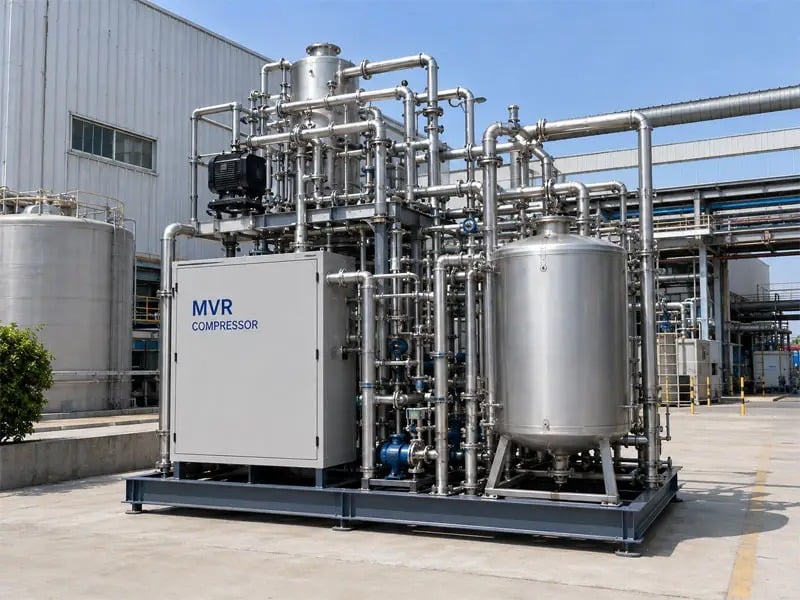
Brine evaporation stands as a critical technology in zero liquid discharge (ZLD) systems, fundamentally transforming how industrial facilities manage their most challenging wastewater streams. When properly timed and optimized, brine evaporation dramatically improves water recovery rates while reducing disposal costs and environmental impact. Understanding the precise conditions under which this process delivers maximum benefit is essential for operators seeking to maximize their ZLD investment and achieve sustainable water management goals.
The effectiveness of brine evaporation in water recovery depends on specific operational conditions, feed characteristics, and system design parameters. Industrial facilities must evaluate when this technology delivers measurable improvement in their water recovery performance relative to the energy input and capital investment required. This article explores the critical factors that determine when brine evaporation becomes the optimal solution for ZLD projects, helping decision-makers align technology selection with their operational and financial objectives.
Understanding Brine Characteristics and When Evaporation Maximizes Recovery
Feed Salinity and Concentration Thresholds
The brine concentration entering the evaporation system directly dictates the potential for water recovery improvement. When feed brine reaches 80 to 300 grams per liter of total dissolved solids, mechanical vapor recompression evaporation becomes economically viable and significantly enhances water recovery. Below these concentration thresholds, crystallization or reverse osmosis may deliver better recovery rates with lower energy demand, while above these levels, thermal crystallization processes often prove more effective for final water recovery optimization.
Industrial wastewater streams from food processing, chemical manufacturing, textile operations, and pharmaceutical production typically generate brines requiring brine evaporation intervention. When these brines enter the system at intermediate concentrations, brine evaporation excels at extracting recoverable water while minimizing the residual solid waste requiring disposal. The timing of brine evaporation within the broader ZLD treatment train directly affects whether overall water recovery improves or stagnates.
Seasonal and Demand-Driven Triggers
Brine evaporation delivers superior water recovery improvement during periods of high water demand or regulatory pressure to minimize discharge. When production schedules intensify and onsite water reuse requirements increase, the economics of brine evaporation shift favorably, making the energy investment justify itself through recovered water value. Conversely, during low-production seasons when water demand drops, temporary suspension of the evaporation system while storing brine concentrates may optimize overall operational efficiency without sacrificing annual water recovery targets.
Regulatory changes often trigger the optimal timing for brine evaporation deployment. When discharge limits tighten or disposal costs escalate, the relative benefit of water recovery through brine evaporation immediately improves. ZLD facilities must monitor both internal operational drivers and external regulatory signals to identify when implementation maximizes the improvement in water recovery metrics.
Energy Efficiency Conditions That Improve Recovery Economics
Waste Heat Integration and Power Availability
The most significant improvement in water recovery economics occurs when facilities can integrate brine evaporation with available waste heat sources. Industrial operations generating continuous heat discharge from process coolers, condensers, or thermal reactors can harness this energy to drive evaporation, dramatically reducing operational costs while improving overall water recovery efficiency. When waste heat integration is feasible, brine evaporation often becomes the preferred method for achieving target water recovery rates within ZLD protocols.
Power cost profiles also determine when brine evaporation improves system economics and therefore justifies capacity investment. Facilities with access to renewable power sources, off-peak rate discounts, or on-site generation can dramatically lower the effective cost of operating brine evaporation systems. These energy advantages translate directly into improved water recovery rates because the system can run continuously without energy constraints limiting operational hours.
Equipment Scale and Processing Volume
Brine evaporation improves water recovery most decisively in facilities processing daily volumes exceeding 50,000 gallons of concentrate. Below this threshold, the fixed operational costs of evaporation equipment often outweigh the value of recovered water, making alternative concentration or crystallization methods more attractive. Above this volume, the economy of scale shifts dramatically, and brine evaporation consistently delivers water recovery improvement that justifies the energy and maintenance investment required.
The timing of equipment installation also affects whether water recovery improves as anticipated. Oversized brine evaporation capacity running at partial load during low-production periods generates recovery rates below design assumptions, while undersized systems cannot handle peak season concentrates, forcing alternative disposal routes. Matching equipment capacity to realistic operational demand profiles ensures that brine evaporation consistently improves water recovery performance across seasonal variation.
Operational Readiness Signals for Optimal Implementation
Brine Pretreatment and Feedstock Preparation
Water recovery improvement through brine evaporation depends critically on proper feedstock preparation upstream. When incoming concentrate contains oils, suspended solids, or organic compounds, scaling and fouling accelerate, reducing the effective surface area available for evaporation and forcing more frequent cleaning cycles that diminish overall water recovery. Facilities must implement effective brine pretreatment, including filtration, centrifugation, or clarification, before feeding streams into evaporation systems to maximize water recovery potential.
The solids content of brine entering evaporation directly determines when this technology improves water recovery versus creating operational problems. Brines with hardness salts, silica compounds, or other crystalline species require specialized pretreatment to prevent buildup within heat transfer surfaces. When pretreatment systems are sized and operated correctly, brine evaporation reliably improves water recovery; without this preparation, the process becomes maintenance-intensive and recovery rates decline.
Residual Waste Management and End-of-Life Disposal
Brine evaporation improves overall ZLD project viability only when facilities establish reliable disposal pathways for concentrated mineral residue and crystallized salts produced during the final water recovery stage. Projects lacking qualified industrial salt recovery vendors, landfill space, or beneficial use markets for crystallized byproducts often encounter implementation delays that postpone water recovery improvement timelines. Evaluating residual disposal economics before deploying brine evaporation ensures that improved water recovery does not create hidden end-of-life cost burdens.
The specific mineral composition of residual solids determines whether water recovery improvements translate into commercial advantages. Some operations generate valuable salt byproducts suitable for de-icing, chemical feedstocks, or soil conditioning, while others produce hazardous waste requiring specialized disposal. When residual characterization reveals commercially viable byproducts, brine evaporation improves not only water recovery rates but also project financial performance through recovered material value.
FAQ
At what brine concentration does evaporation become more effective than other concentration methods for water recovery?
Brine evaporation typically outperforms reverse osmosis and other membrane technologies when incoming concentrate exceeds 80 to 120 grams per liter of total dissolved solids. Below this concentration range, membrane systems often deliver superior water recovery with lower energy consumption. Above 200 grams per liter, thermal crystallization or advanced concentration methods may prove more economical for achieving final water recovery targets. The optimal technology selection depends on specific feed characteristics, energy availability, and facility-specific operational constraints within the broader ZLD system.
How does waste heat integration improve brine evaporation water recovery economics?
Waste heat integration can reduce operating costs of brine evaporation by 40 to 60 percent by providing thermal energy that would otherwise be rejected to atmosphere or cooling systems. This dramatic cost reduction improves the financial justification for larger evaporation capacity, enabling higher water recovery rates across the entire treatment train. Facilities with continuous heat sources such as thermal processes or condensing steam lines can achieve water recovery improvement that approaches theoretical limits by coupling waste heat directly to evaporation systems.
What operational readiness factors must be verified before deploying brine evaporation for water recovery?
Critical readiness factors include adequate feedstock pretreatment to prevent scaling, confirmed disposal pathways or beneficial use markets for crystallized residuals, reliable power or waste heat availability, and storage capacity for concentrate during system maintenance or peak loading periods. Facilities must also verify that regulatory permits and monitoring requirements align with planned water recovery targets. Addressing these factors before brine evaporation deployment ensures that water recovery improvement is sustained and that operational challenges do not compromise ZLD project viability or environmental compliance.

 EN