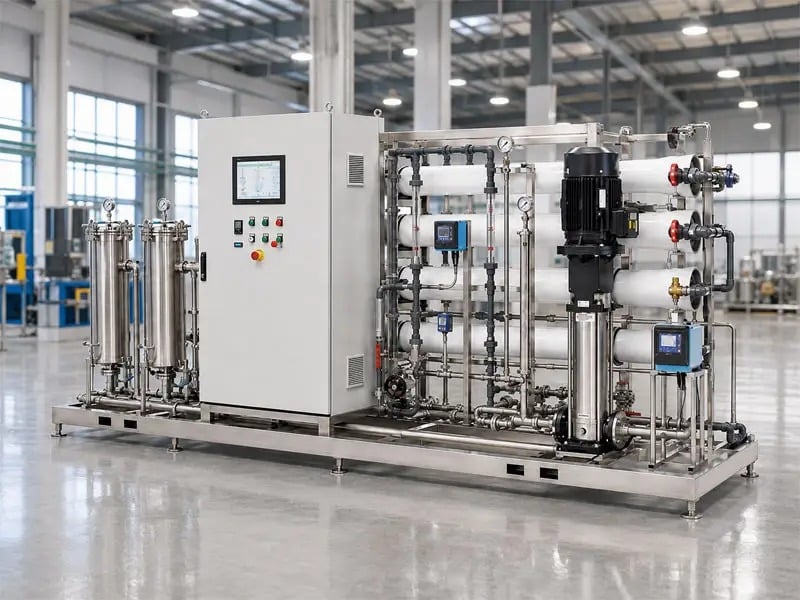
During plant expansion, managing wastewater becomes increasingly complex. Production increases, facility footprints grow, and existing treatment infrastructure often cannot keep pace with new operational demands. A mobile wastewater treatment system offers a practical solution that maintains compliance and environmental responsibility while your permanent infrastructure upgrades. This strategic approach allows facilities to scale operations without the risk of regulatory violations or operational interruptions that could derail expansion timelines.

The decision to deploy temporary treatment capacity during plant expansion requires understanding both the operational realities and the regulatory landscape. Facilities facing capacity constraints often discover that traditional approaches—delaying expansion, accepting penalties, or rushing permanent upgrades—create far greater costs and complications. Modern mobile solutions provide flexibility, rapid deployment, and predictable performance that align seamlessly with expansion schedules and budget planning.
Understanding Capacity Gaps During Expansion
When Permanent Infrastructure Lags Behind Growth
Plant expansion typically unfolds in phases. New production lines come online before expanded wastewater treatment capacity is fully operational. This temporal mismatch creates a critical vulnerability. Existing treatment systems, designed for historical throughput, suddenly face volume surges from new operations. Without supplementary capacity, treatment efficiency drops, effluent quality degrades, and regulatory compliance becomes fragile. A temporary treatment solution bridges this gap by providing dedicated processing power while permanent systems are constructed and commissioned.
The plant expansion process involves construction timelines that rarely align perfectly with operational needs. Permanent treatment facilities require site preparation, engineering design, equipment procurement, installation, and testing—often spanning 12 to 24 months. During this period, production cannot wait. A mobile wastewater treatment system enables facilities to increase output immediately while permanent infrastructure develops in parallel, eliminating the false choice between expansion delays and compliance risk.
Avoiding Operational Shutdown
Every day of operational shutdown costs significant revenue and damages customer relationships. Some facilities mistakenly assume they must halt production during treatment system upgrades. This assumption is incorrect. Temporary treatment capacity allows production to continue uninterrupted throughout the entire expansion and upgrade cycle. The mobile system absorbs incremental wastewater volumes, maintaining discharge compliance while permanent infrastructure work proceeds. This continuity is invaluable for customer commitments, market positioning, and financial projections tied to the expansion.
Strategic Advantages of Mobile Treatment During Expansion
Rapid Deployment and Flexibility
Mobile wastewater treatment systems arrive ready to operate within days of site preparation, not months. This speed matters enormously during plant expansion because it allows facilities to synchronize treatment capacity with new production line activation dates. Unlike permanent installations, temporary treatment systems can be sized precisely to match actual incremental volume. If a second expansion phase becomes necessary, additional mobile units scale capacity further. This flexibility prevents over-investment in permanent infrastructure that may never be fully utilized.
The modularity of mobile treatment aligns naturally with phased plant expansion strategies. Whether expansion involves 10%, 30%, or 100% production increases, temporary treatment can be tailored to exact requirements. Facilities avoid the burden of designing and funding oversized permanent systems that create long-term operational costs. The mobile system is also relocatable, so if business conditions change or expansion plans shift, treatment capacity can be reassigned to other facilities or operations without abandonment waste.
Cost Predictability and Financial Planning
Capital budgets for plant expansion are already strained. Expedited permanent wastewater treatment construction often requires premium labor, expedited procurement, and compressed schedules that inflate costs substantially. Mobile treatment systems operate on transparent rental or lease models, converting unpredictable capital expenses into manageable operational line items. This financial structure improves budgeting accuracy and frees capital for core expansion investments—new production equipment, facility construction, or technology upgrades that directly generate revenue.
Additionally, temporary treatment eliminates the risk of cost overruns on permanent systems. Construction delays, design changes, or unforeseen site conditions commonly blow out permanent treatment project budgets by 20% to 40%. Mobile solutions sidestep these risks by offering fixed pricing structures and predictable timelines. Facility managers can forecast treatment costs with confidence, knowing that temporary capacity will arrive on schedule and operate within specified parameters throughout the expansion period.
Regulatory and Environmental Compliance
Maintaining Discharge Standards Throughout Transition
Environmental regulators do not grant expansions on the assumption that wastewater standards will be temporarily relaxed. Permits remain in force regardless of expansion status. A temporary treatment system ensures that discharge permits are never jeopardized by production growth. Water quality, flow rates, and effluent composition stay within regulatory limits, protecting facility operating licenses and avoiding penalties that could dwarf the cost of temporary treatment by orders of magnitude. This compliance continuity is non-negotiable in heavily regulated industries.
Many facilities operate in water-stressed regions where regulators scrutinize discharge practices intensely. During plant expansion, demonstrating proactive commitment to environmental protection through mobile wastewater treatment systems can strengthen relationships with regulatory bodies. Rather than appearing to tolerate compliance risks, facilities signal responsibility and operational maturity. This perception supports future permitting efforts, facility expansions, and interactions with environmental agencies. The regulatory confidence extends timelines and reduces approval friction.
Meeting Local and State Environmental Targets
Increasingly, states and localities impose environmental targets—percentage reductions in water consumption, discharge volumes, or contaminant loads. Plant expansion creates an opportunity to exceed baseline targets by deploying treatment systems that recover and reuse water, reducing environmental impact while expanding production. Mobile treatment units equipped with recovery technologies allow facilities to treat incremental wastewater and return clean water to processes or local water systems, improving environmental profiles during growth phases. This capability supports corporate sustainability goals and regulatory alignment simultaneously.
FAQ
What size mobile wastewater treatment system do I need for plant expansion?
System size depends on the volume increase from your plant expansion. Calculate the additional wastewater generated by new production lines, then select a mobile treatment system rated for that incremental capacity plus a safety margin. Most facilities underestimate wastewater volume, so adding 15% to 20% buffer capacity prevents overload conditions. Consult with treatment specialists to analyze your specific wastewater characteristics and treatment requirements. Temporary treatment systems are available in modular sizes, allowing you to match capacity precisely to expansion phases.
How long can a temporary wastewater treatment system operate during plant expansion?
Mobile wastewater treatment systems can operate continuously throughout your entire plant expansion period—typically 12 to 24 months or longer. These systems are engineered for extended deployment, not short-term emergency use. Maintenance schedules align with operational needs, and rental or lease agreements are structured to accommodate variable durations. If permanent treatment capacity comes online ahead of schedule, the temporary system can be removed, returned, and redeployed. Conversely, if expansion timelines extend, treatment capacity remains available without contract renegotiation complications.
Can a mobile wastewater treatment system reduce my permanent infrastructure costs?
Yes. By deploying temporary capacity during expansion, you eliminate pressure to expedite permanent system construction. This allows permanent infrastructure to be built on a normal timeline, avoiding premium labor costs and accelerated procurement expenses. Additionally, you gain operational data from the temporary system, refining permanent system design and sizing decisions. Over-investment in permanent capacity is prevented because temporary treatment proves actual requirements. This combination of extended timelines, better design information, and right-sized permanent systems reduces total capital expenditure for long-term wastewater treatment.

 EN