Customer Profile
Guangdong Jing Technology Development Co., Ltd.* is a wholly-owned subsidiary of *Jiangsu Gian Technology Co., Ltd. (Stock Code: 300709)**, established in 2014.
The company specializes in integrated metal powder injection molding (MIM) manufacturing solutions, focusing on precision hardware components, plastic parts production, and assembly services for consumer electronics and personal care products.
The main manufacturing processes include:
- MIM (Metal Injection Molding)
- Plastic injection molding
- PVD coating
- Magnetic polishing
- Laser engraving
- Spot welding
- Sandblasting
- Product assembly
Project Information
Project Scale:
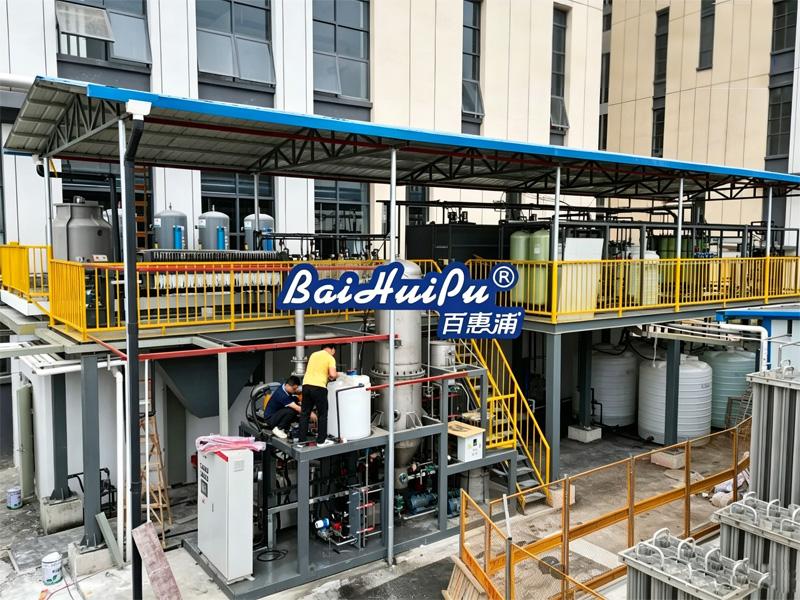
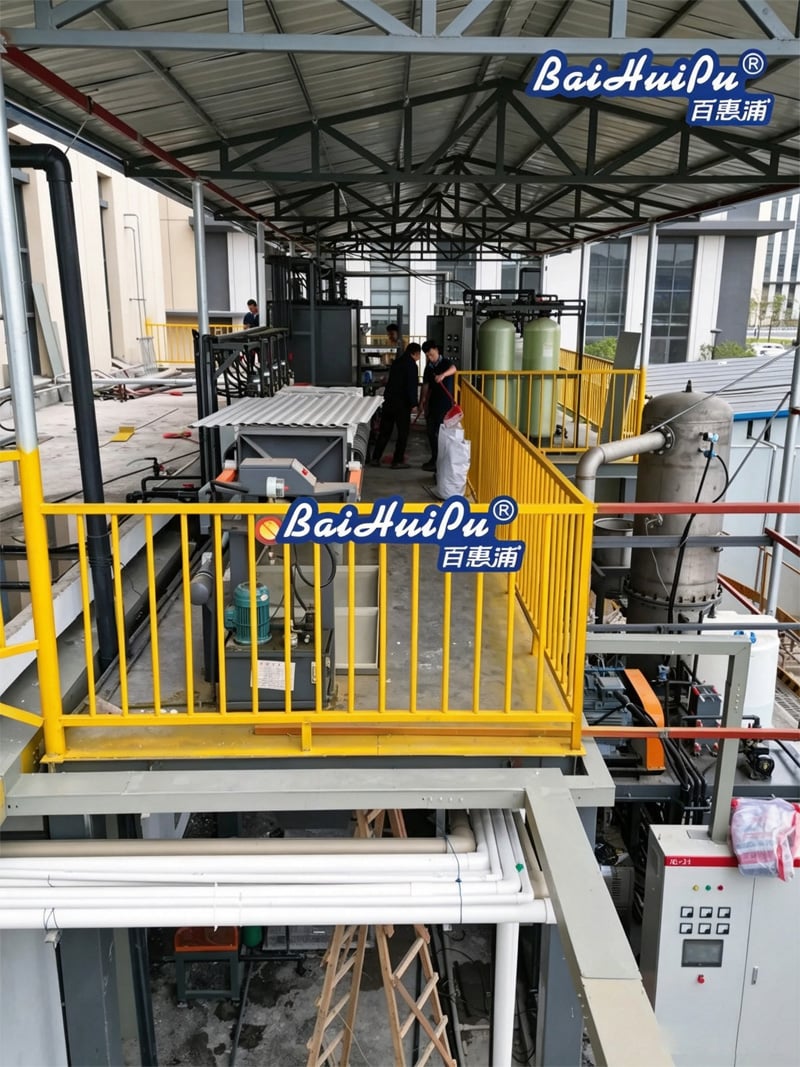
25 m³/day metal grinding wastewater treatment system
Core Treatment Concept:
Source separation → Classified treatment → Resource recovery → Compliance assurance
Reuse Standard:
Reclaimed water suitable for process and production applications
Project Highlights
- Zero liquid discharge (ZLD) wastewater management approach
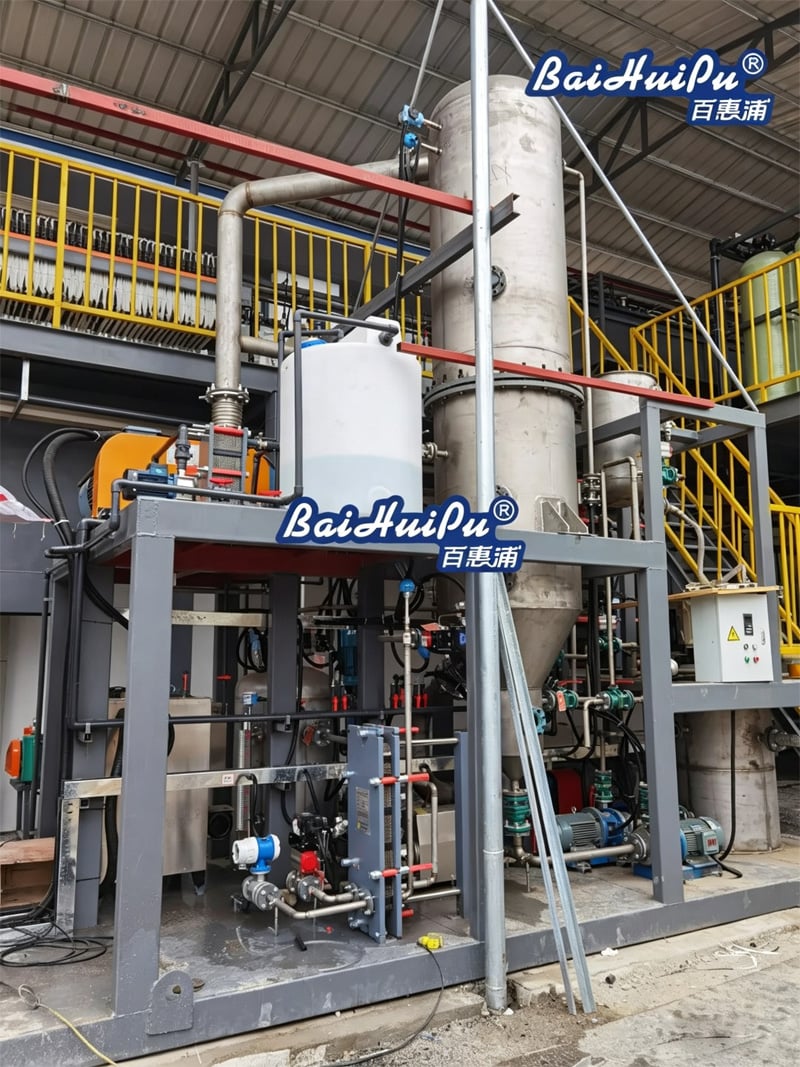
- MVR evaporation technology integration
- Reduced scaling tendency during operation
- Compact treatment process structure
- Simplified equipment operation
- High automation level
- Efficient concentration performance
- Convenient maintenance management
Metal Grinding Wastewater Characteristics
Grinding is a precision machining process that uses abrasives and grinding tools to remove a thin layer of metal from a workpiece surface after precision processing.
Grinding wastewater is an important category of industrial wastewater, commonly generated from:
- Metal processing
- Electronics manufacturing
- Printing
- Surface coating operations
This type of wastewater typically contains:
- Suspended metal particles
- Heavy metal ions
- Oils and grease
- Organic pollutants
- Chemical additives
Without proper treatment, direct discharge may create environmental compliance risks and increase wastewater management challenges for manufacturers.
Wastewater Characteristics & Customized Treatment Process
The wastewater sources of this project mainly include:
- Washing wastewater
- High-concentration chemical cleaning tank wastewater
Based on water sample analysis and pilot testing, the wastewater characteristics were identified as:
- High organic pollutant concentration
- Elevated oil content
- Complex wastewater composition
- COD concentration reaching approximately 15,000 mg/L
Due to the high organic load and variable pollutant composition, Baihuipu developed a customized ZLD treatment process based on wastewater classification and resource recovery principles.
Customized Treatment Flow
High-Concentration Chemical Cleaning Wastewater:
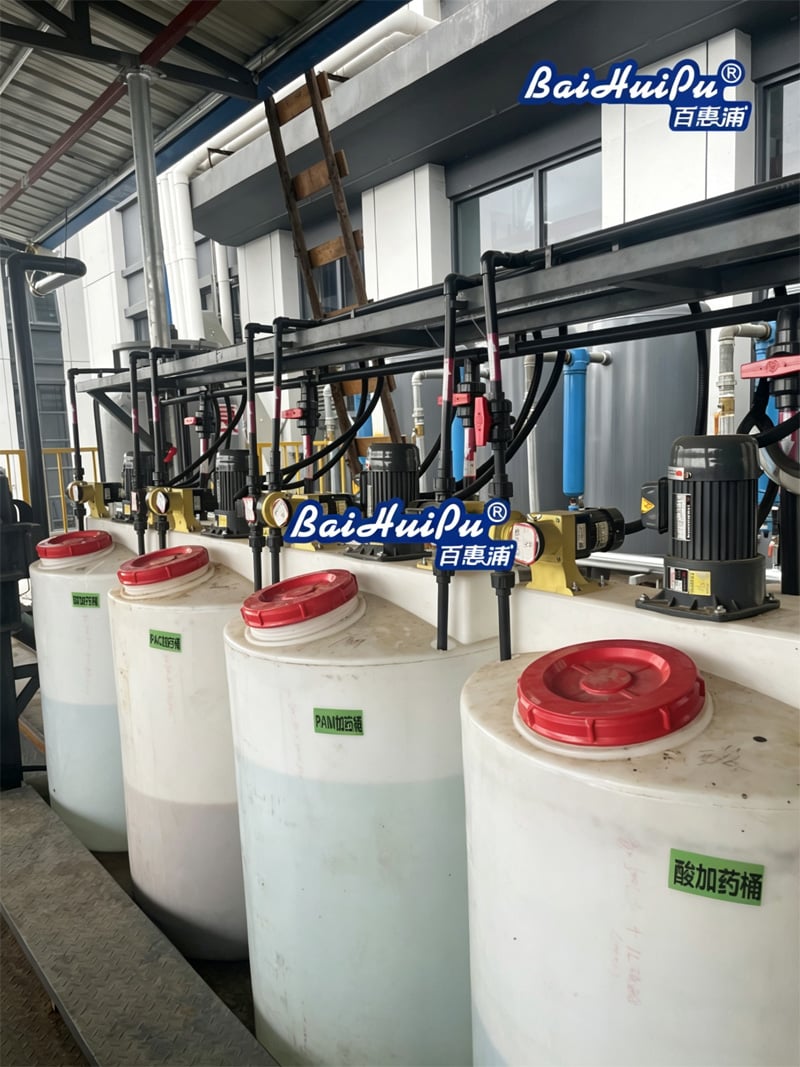
Air Flotation → Coagulation → Plate & Frame Filter Press → Combined Treatment with Washing Wastewater
Washing Wastewater:
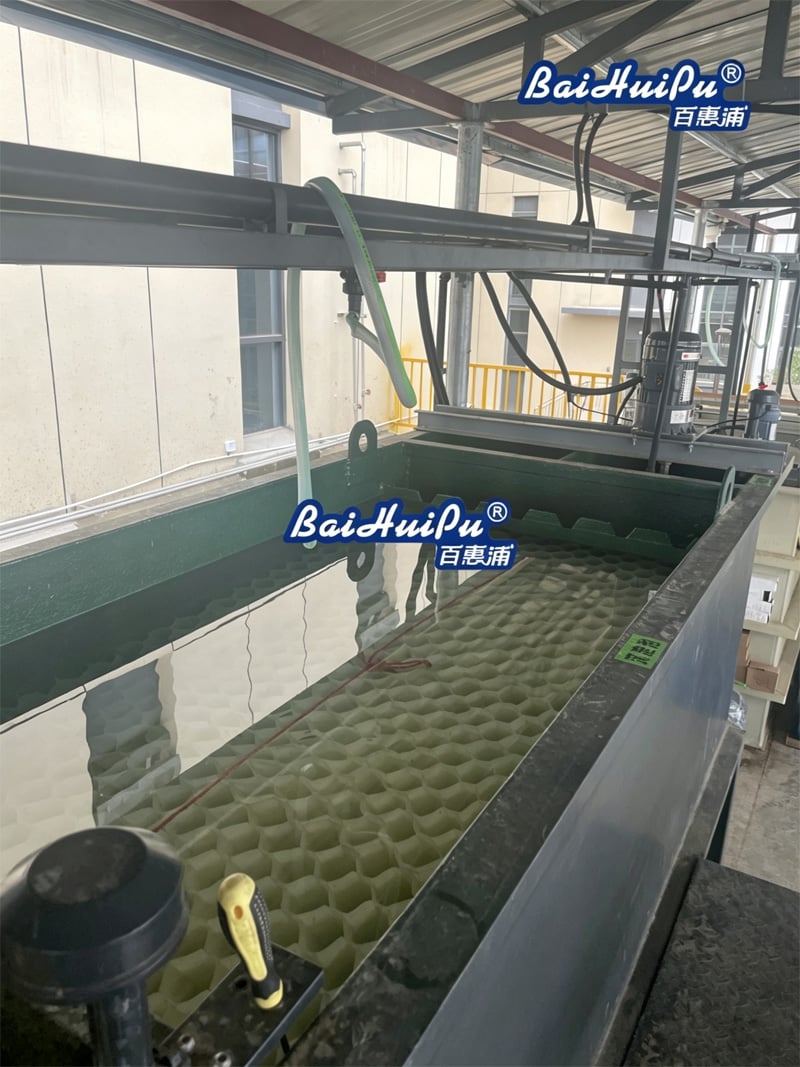
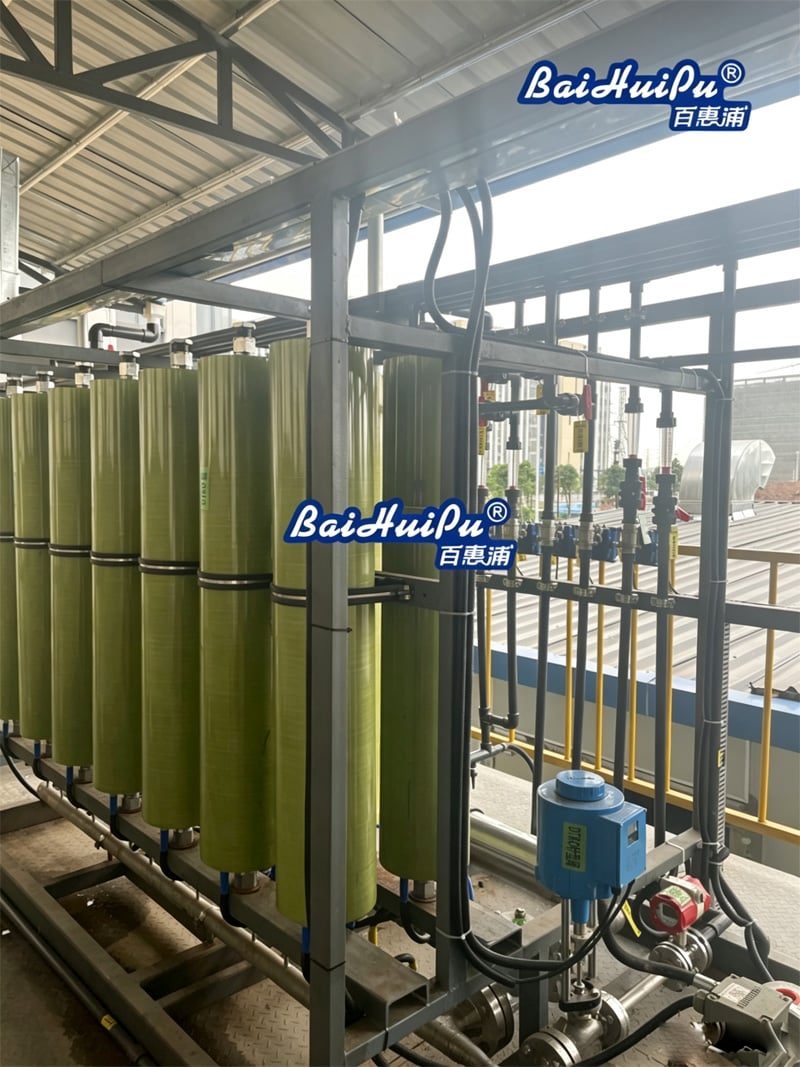
Oil Separation Air Flotation → Coagulation → Sedimentation → Ozone Oxidation → Intermediate Water Tank → Ultrafiltration → DT-RO → Reclaimed Water Tank
Concentrated Wastewater Treatment:
DT-RO Concentrate Tank → MVR Evaporation System → Concentration & Reduction Treatment
The overall treatment strategy follows:
Wastewater Separation → Classified Treatment → Comprehensive Recovery → Discharge Risk Reduction
Wastewater Collection & System Integration
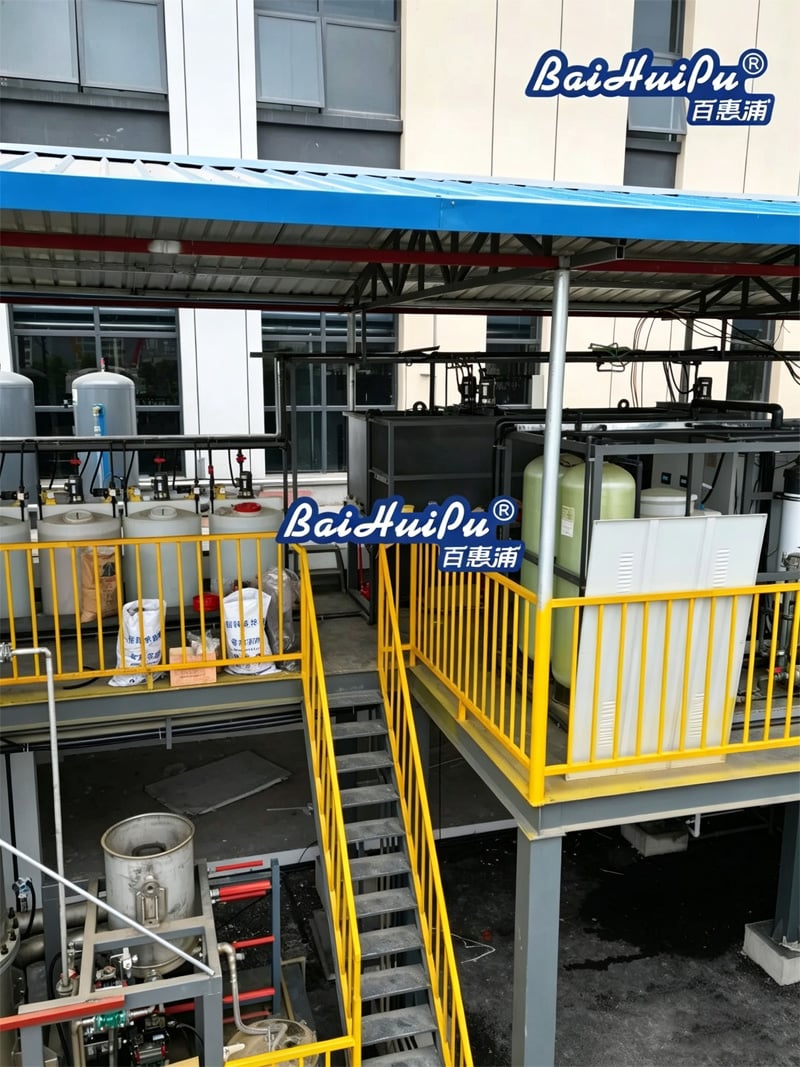
Based on the analysis of wastewater flow characteristics and pollutant composition, the project includes newly constructed collection systems for:
- Acidic and alkaline rinsing wastewater
- Chemical cleaning wastewater
- Other production wastewater streams
The customer transfers production wastewater into designated collection tanks or existing collection pits.
Baihuipu supplied independent lifting pump systems for these collection units, allowing wastewater to be transferred into the newly installed treatment system for centralized processing.
This design improves wastewater collection efficiency and supports stable operation of downstream treatment units.
Project Advantages
The main advantages of this MIM grinding wastewater ZLD system include:
1. Classified Collection & Treatment Design
Different wastewater streams are collected separately and treated according to pollutant characteristics before combined downstream processing.
2. Combined Physicochemical & Ozone Oxidation Process
The system integrates:
- Physicochemical treatment
- Ozone oxidation
- Advanced membrane separation
- MVR evaporation
to address complex organic pollutants and high-concentration wastewater conditions.
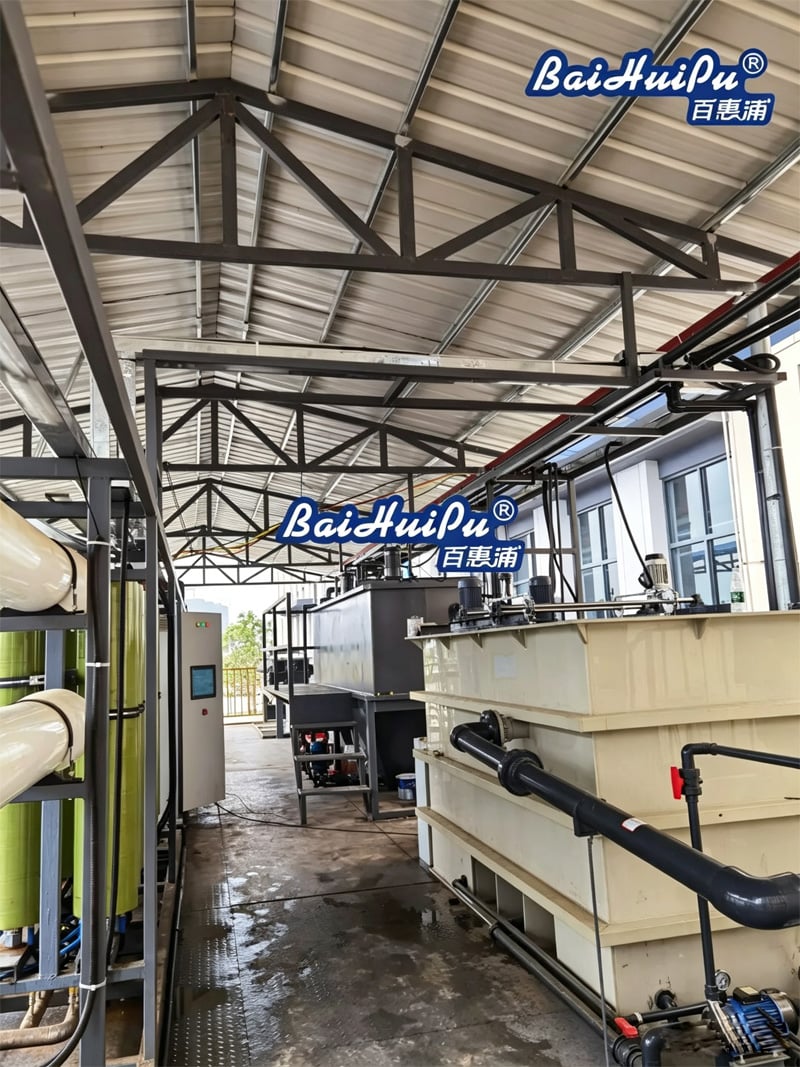
3. Compact and Efficient System Structure
Compared with conventional treatment approaches, the system features:
- Reduced footprint requirements
- Stable treatment performance
- Simplified maintenance procedures
4. High Water Recovery Performance
The system improves wastewater reuse efficiency while reducing final discharge volume, supporting sustainable manufacturing operations.
5. Flexible Hydraulic Load Design
The treatment system incorporates operational margins to accommodate production fluctuations and wastewater load variations.
6. Advanced Automation & Process Integration
The system adopts:
- Mature treatment technologies
- Compact process configuration
- Automated operation control
- Optimized equipment layout
to support efficient wastewater management.
7. Industrial Design Optimization
The overall system layout considers:
- Equipment integration
- Operation convenience
- Site utilization
- Factory environment requirements
Baihuipu’s metal grinding wastewater zero liquid discharge system combines conventional physicochemical treatment, ozone oxidation, specialized membrane separation technologies, and MVR evaporation processes to achieve efficient wastewater purification and resource recovery.
Project Results
After implementation of Baihuipu’s metal grinding wastewater ZLD system:
- Reclaimed water quality remains stable and meets factory reuse requirements.
- Water reuse rate reaches above 98%.
- Concentrated wastewater containing residual COD, salts, and heavy metals is transferred to qualified hazardous waste treatment companies for compliant disposal.
Through wastewater recovery, advanced concentration treatment, and resource utilization, the project minimizes production wastewater discharge and supports environmentally responsible manufacturing operations.

 EN