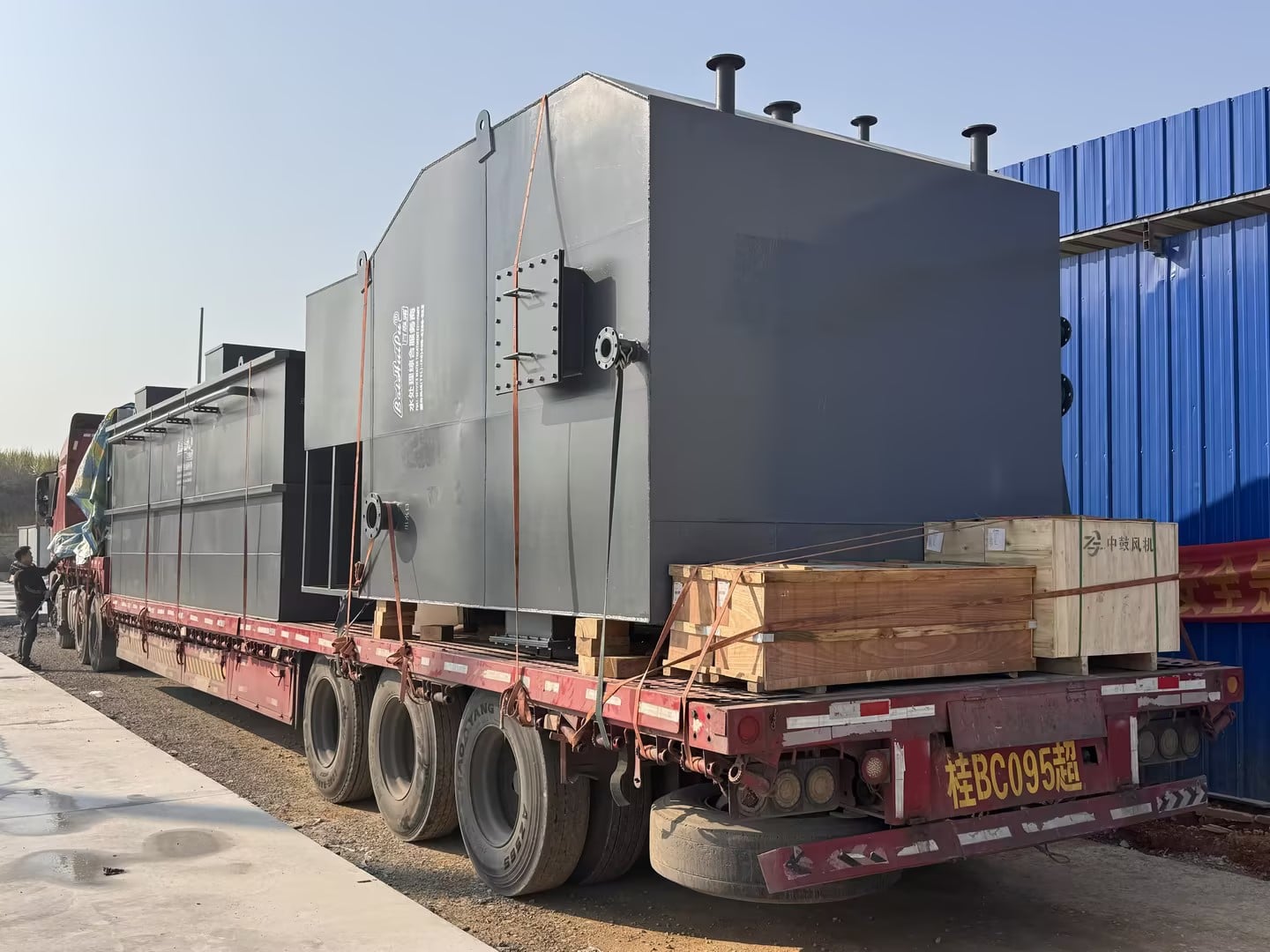
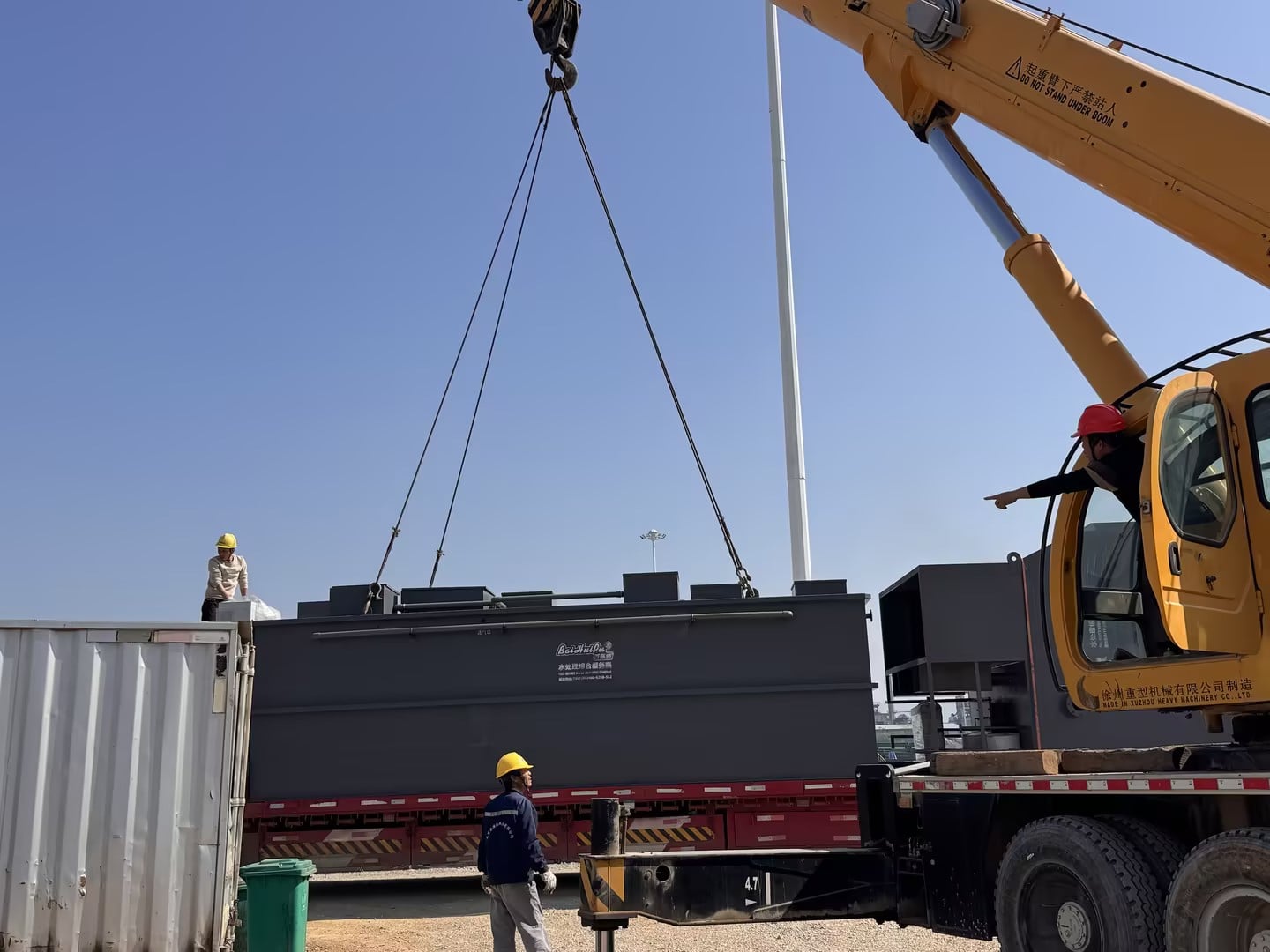
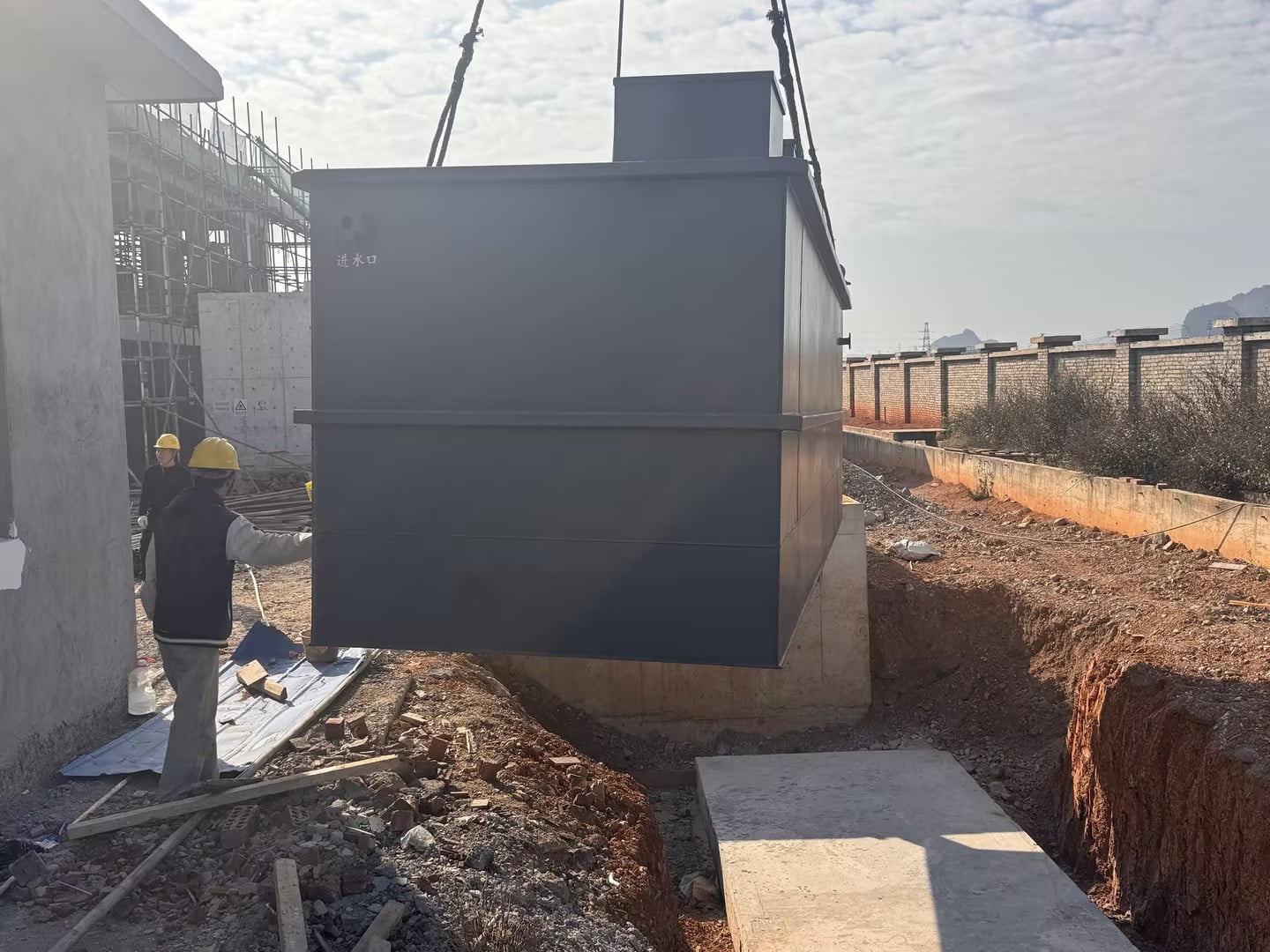
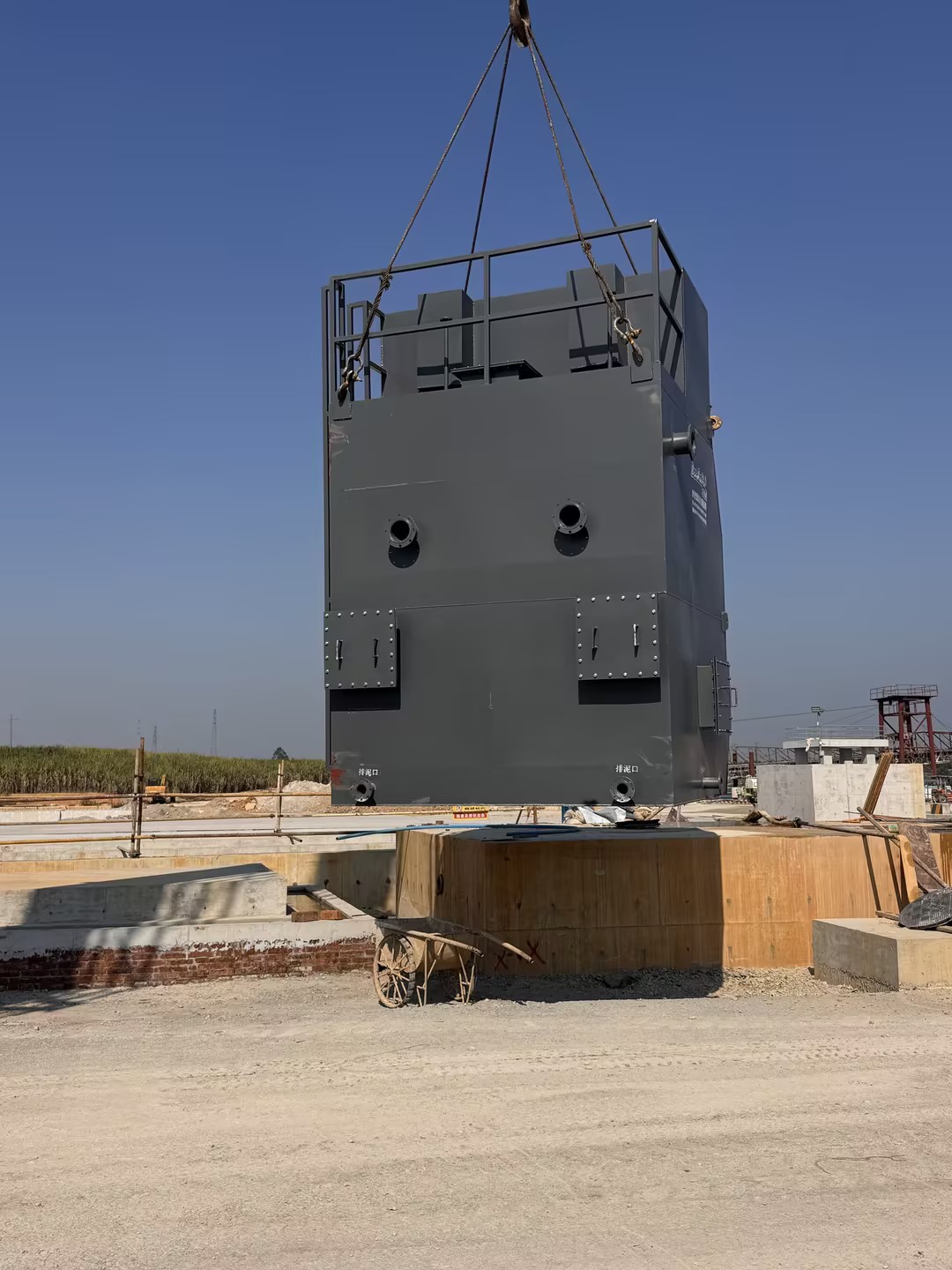
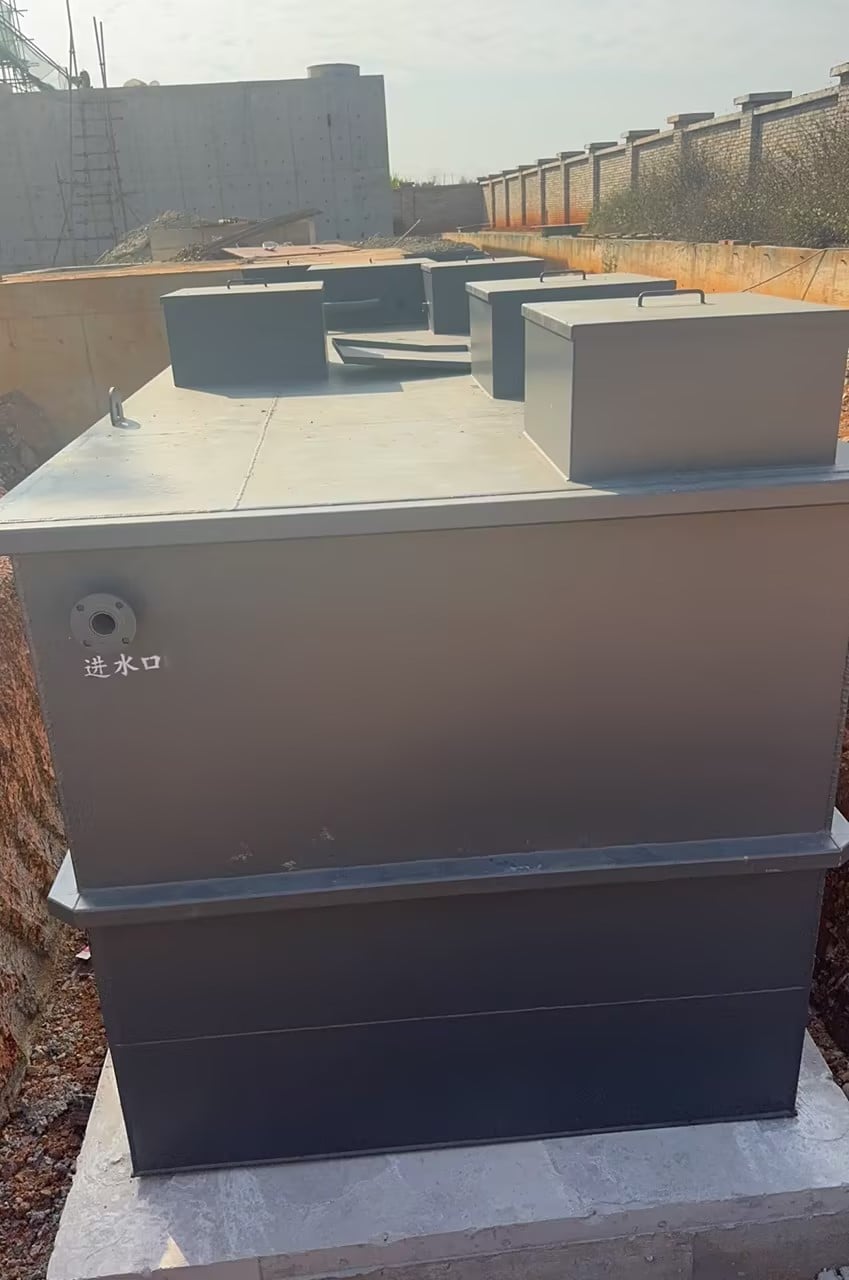
Designed for 20 m³/d of mixed oily wastewater from an inland terminal in Wuxuan, Guangxi. A dedicated oil-separation pretreatment process removes floating and emulsified oil from machinery washing and berth runoff. The fully automated system provides high oil-removal efficiency, stable compliant effluent, and optional reclaimed-water reuse upgrades.
Key Product Specifications
|
Project Name
|
20 m³/d Wastewater Treatment Project for Wuxuan County Terminal, Guangxi
|
|
Total Treatment Capacity
|
20m³/d(0.83m³/h)
|
|
Wastewater Sources
|
Berth washdown water, yard washing water, machinery-maintenance wastewater, and a small amount of domestic wastewater from the port area
|
|
Influent Characteristics
|
Influent Characteristics: High suspended solids and heavy sediment buildup; mineral oil from vessels and cargo-handling machinery, including floating oil and a small amount of emulsified oil, is the principal pollutant. The wastewater also contains low concentrations of COD and ammonia nitrogen, with substantial intermittent flow fluctuations.
|
|
Main Treatment Process
|
Screening pretreatment → oil separation and sedimentation → equalization and homogenization → coagulation, demulsification, flocculation and sedimentation → A/O biological treatment → precision filtration → compliant discharge
|
|
Apllicable Standard
|
Integrated Wastewater Discharge Standard (GB 8978-1996), Class II requirements (customizable to Class I)
|
|
Equipment Condiguration
|
Integrated underground modular equipment featuring a compact, lightweight design and fully automatic intelligent control
|
|
Applicable Scenarios
|
Treatment of Mixed Domestic and Industrial Wastewater at Small Inland Freight Terminals, Sand and Gravel Terminals, and Bulk Cargo Port Areas
|
|
Upgrades and Expansions
|
Ultraviolet disinfection, MBR membranes, and RO reverse osmosis systems can be added to enable the reuse of treated wastewater for sprinkler systems and landscaping in the port area.
|
Detailed Product Description
This 20 m³/d integrated wastewater treatment system is custom-designed for oily wastewater at an inland terminal in Wuxuan County, Guangxi. It addresses petroleum contamination commonly found at inland bulk-cargo terminals and loading berths and is suitable for a low-flow, intermittent mixture of operational and domestic wastewater. Unlike ordinary domestic wastewater, the main challenge is mineral-oil contamination from machinery maintenance and washing, berth stormwater runoff, and residual floating oil from vessels. Oil mixed with sediment forms oily sludge that can adhere to pipes and clog treatment units. Conventional equipment without dedicated oil-removal structures is prone to oil accumulation, excessive petroleum levels in the effluent, and biological-process failure. This system uses an optimized oil-removal process for fluctuating oil concentrations and limited operating resources at small county-level terminals, enabling efficient simultaneous removal of oil, sediment, and organic pollutants.
The system covers the full range of oily terminal wastewater, including wash water from loading equipment, oily runoff from yards and berths, trace oily wastewater from berthed vessels, and domestic wastewater from the port area. Key pollutants include suspended sediment, floating oil, dispersed and emulsified oil, COD, ammonia nitrogen, and total phosphorus. Terminal operations are intermittent: oil and sediment concentrations rise sharply during peak activity and fall during idle periods, creating strong shock loads. Stable emulsified oil cannot be fully removed by conventional filtration. The system therefore uses multi-stage oil removal and step-by-step purification. A dedicated front-end oil-separation and sedimentation unit uses gravity to capture floating oil and large oily-sludge particles for primary oil-water separation. Coagulation and demulsification then break the oil-water interface, while flocculation captures fine dispersed and emulsified oil particles. This removes petroleum pollutants before they enter the biological system and ensures stable downstream operation.
After petroleum pollutants are thoroughly removed, the system uses a proven A/O biological process to degrade organic contaminants and remove nitrogen and phosphorus, controlling eutrophication while ensuring comprehensive water-quality compliance. Its underground, integrated modular design is compact and occupies very little land, preserving terminal loading and unloading space. The main body uses corrosion- and oil-resistant materials suited to Guangxi's rainy, humid climate, providing resistance to aging and preventing long-term oily-sludge buildup and clogging. Fully automatic intelligent controls adjust chemical dosing and operating parameters according to influent oil concentration and flow. The system accommodates water-quality fluctuations without continuous staffing, simplifies maintenance, reduces chemical consumption, and lowers environmental operating costs for small terminals.
The equipment specifically addresses excessive petroleum levels in inland-terminal wastewater and provides high oil-removal efficiency. Petroleum, suspended solids, COD, ammonia nitrogen, and other effluent indicators consistently meet the Integrated Wastewater Discharge Standard (GB 8978-1996), supporting routine inspections, online monitoring, and annual verification. This reduces the risks associated with improper oily-wastewater discharge, non-compliance penalties, and shutdowns for corrective work. Reserved upgrade connections allow the addition of dissolved-air flotation, UV disinfection, MBR membrane treatment, and RO advanced treatment. After upgrading, treated water can be reused for site washing, dust suppression, and landscaping, enabling resource recovery and water recycling. With a proven process, stable oil-removal performance, and strong cost-effectiveness, the system provides a reliable integrated solution for oily wastewater treatment and low-carbon, compliant operation at small inland terminals in Guangxi.
 |
 |

 EN