
food-processing-wastewater-treatment-industry-solution, food-processing-wastewater-treatment-industry-solution, /solutions
EN
Food processing wastewater is widely generated from the production of fruit and vegetable processing, meat products, grain and edible oil products, ready-to-eat foods, snack foods, and prepared meals. Major wastewater sources include raw material washing, blanching and curing, equipment cleaning, CIP (Clean-in-Place) system cleaning, and plant floor washdown operations.
As a typical high-strength organic industrial wastewater, it primarily contains food residues, animal and vegetable fats and oils, starch, soluble proteins, sugars, and suspended solids (SS), together with elevated levels of COD, BOD, ammonia nitrogen (NH₃-N), total phosphorus (TP), and total nitrogen (TN).
Food processing wastewater generally exhibits excellent biodegradability and is typically free of heavy metals. However, seasonal production cycles and batch manufacturing result in significant fluctuations in wastewater flow and pollutant concentrations. Organic matter readily undergoes anaerobic decomposition, causing odor generation, bacterial growth, and the production of highly viscous sludge. Without proper treatment, the wastewater can easily lead to eutrophication, making it one of the primary environmental management challenges for the food processing industry.
Food processing wastewater treatment presents several industry-specific challenges:
Based on the common characteristics of food processing wastewater, we utilize a mature treatment process consisting of:
Pretreatment (Screening & Oil Removal) → Flow Equalization → Anaerobic Treatment → Aerobic Biological Treatment → Advanced Sedimentation & Disinfection → Water Reuse
Wastewater first passes through mechanical bar screens and dissolved air flotation (DAF) systems to remove coarse food residues, floating grease, suspended solids, and oil contaminants.
An equalization tank balances wastewater flow and pollutant concentrations, minimizing shock loads caused by batch production.
A high-efficiency anaerobic reactor significantly reduces organic loading before wastewater enters the A/O (Anoxic/Oxic) biological treatment system, where COD, ammonia nitrogen, and total phosphorus are effectively removed.
Finally, the treated water undergoes sedimentation, precision filtration, and disinfection to ensure stable compliance with environmental discharge standards. The reclaimed water can be reused for plant cleaning, equipment washing, and other non-potable applications.
This solution is designed to accommodate wastewater generated across virtually all food processing sectors, effectively addressing common challenges such as fluctuating wastewater quality, grease accumulation, sludge instability, and odor control while consistently achieving stable discharge compliance.
Customized non-standard equipment can be engineered according to product type, wastewater volume, available installation space, and production capacity. Optional features include anti-fouling flow channels, anti-clogging structures, corrosion-resistant housings, and compact modular designs, ensuring clean operation, low odor emissions, and simplified maintenance for food-grade production environments.
All core mechanical, electrical, and water treatment equipment is certified to CE and UL international standards, providing outstanding operational reliability, safety compliance, and compatibility with international food manufacturing requirements.
We have successfully implemented numerous wastewater treatment systems for fruit and vegetable processors, meat processing plants, prepared meal manufacturers, grain and edible oil producers, and other food processing facilities.
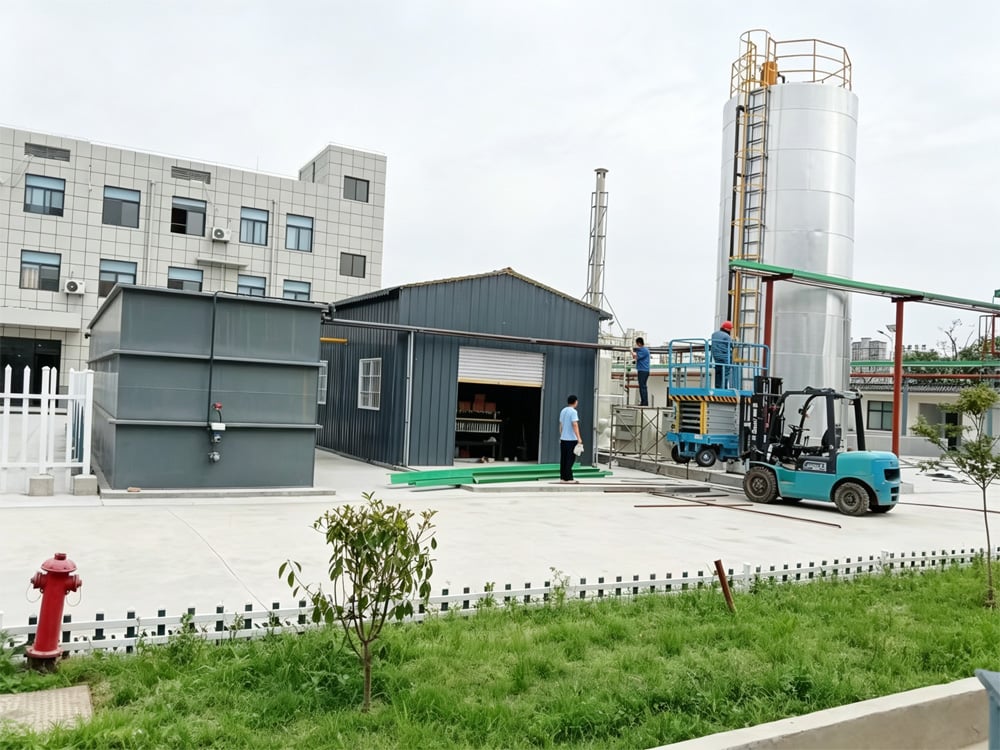
A representative reference project is a comprehensive wastewater treatment and water reuse system for a large food industrial park, with a treatment capacity of 1,000 m³/day. The system effectively treats mixed wastewater from multiple food production processes while resolving challenges related to fluctuating organic loading, grease fouling, and odor emissions. The system has maintained stable year-round operation and successfully passed environmental acceptance inspections on the first review.
We provide turnkey EPC (Engineering, Procurement & Construction) solutions for food processing wastewater treatment, covering the complete project lifecycle, including:

 EN